Saturday, 26th April 1986 in Kyiv
Welcome to your daily snapshot of Kyjiw! It's World Intellectual Property Day and Chernobyl Disaster Anniversary. Explore 54 historical events, birthdays, deaths, and milestones that shaped this day in Kyjiw. From remarkable moments in local and world history to the people who left their mark — find out what makes today special. Today's weather in Kyjiw brings drizzly with temperatures between 6°C and 18°C. Tonight's moon is in its new moon phase, and the zodiac sign of the day is Taurus. If you're curious about the history of a day — this page brings together everything worth knowing about this Saturday, 26th April in Kyjiw, UA.
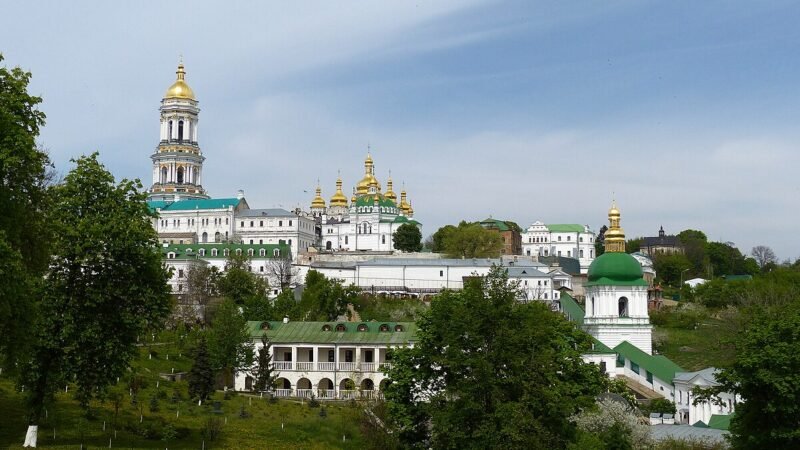
Kyjiw is Ukraine's capital and largest city, situated on the Dnipro River in north-central Ukraine. On Saturday, 26 April 1986, the weather was drizzly. The zodiac sign for this date is Taurus, and the moon was in its new moon phase.
On this day
On this date in 1986, the Chernobyl Nuclear Power Plant near Chernobyl in the Ukrainian Soviet Socialist Republic suffered a catastrophic steam explosion, triggering a fire and nuclear meltdown. The disaster forced the evacuation and resettlement of over 336,000 people across Europe and remains the most severe nuclear accident in history. The event would have profound long-term consequences for nuclear energy policy worldwide and the affected regions of Ukraine and Belarus.
In the years following, the anniversary of this tragedy would become a focal point for international reflection on industrial safety and nuclear security. Additionally, on 26 April 1965, the Bombing of Guernica by the Condor Legion of the Luftwaffe devastated the Basque town during the Spanish Civil War, resulting in widespread destruction and civilian casualties that inspired Pablo Picasso's monumental anti-war painting, one of the twentieth century's most iconic artworks.
World Intellectual Property Day
World Intellectual Property Day, established by the World Intellectual Property Organization (WIPO), marks 26 April each year to raise awareness of intellectual property and its role in encouraging innovation and creativity. The date commemorates the entry into force of the WIPO Convention in 1970, which established the organisation as a specialised agency of the United Nations. The day has been observed since 2000 and focuses on different themes annually to highlight the importance of patents, trademarks, copyrights, and industrial designs in driving economic growth and development.
Chernobyl Disaster Anniversary
The Chernobyl Disaster Anniversary on 26 April commemorates the catastrophic nuclear accident that occurred at the Chernobyl Nuclear Power Plant near Chernobyl in the Ukrainian Soviet Socialist Republic in 1986. The accident resulted from a steam explosion during a safety test, triggering a fire and nuclear meltdown that forced the evacuation and resettlement of over 336,000 people across Europe. It remains the worst nuclear disaster in history and has been observed as a day of remembrance since the incident, serving as a stark reminder of the dangers of nuclear accidents and the need for rigorous safety standards in the nuclear power industry.
DayAtlas displays historical weather conditions, significant events, notable births and deaths, and other information for any specified date and location worldwide.
Find out what's happening today in Kyjiw.
What the Weather Had in Store for Kyjiw on 28th November 2026
April whispers: decay and blooming speak the same language.
Fortune of the Day
26th April in the Stars – Star Sign Taurus
Personality Profile
Personality Those born on April 26th combine Taurus steadiness with Saturn discipline. They appear calm and dependable, yet with creative impulses. This blend makes them practical dreamers who pursue goals methodically.
Strengths & Weaknesses Their strengths lie in patience, endurance, and sensory perception. Saturn's influence reinforces responsibility. Weakness: rigidity and impatience with less structured people can emerge.
Love April 26th natives seek deep, stable partnerships. They're loyal and sensual, yet need personal space. Their Venus nature attracts beauty, while Saturn favors lasting commitment over superficiality.
Caree & Finance These people thrive in roles blending creativity with organization. Financial security matters greatly; they build wealth steadily. Craftsmanship, design, or management suit their strengths well.
Health April 26th natives benefit from regular movement and sensual activities like yoga or dancing. They tend toward stress from overwork; relaxation rituals are essential. Adequate sleep supports emotional balance.
That night, the moon was in its new moon phase.
Chinese year of the Tiger (Fire).
Fun Facts About 26th April
Name Days in Your Language: Clarence, DeMarco, Demarcus, Demario
Someone born on this day in 1986 would be 40 years old today — just 14,826 days into life, which is roughly 355,829 hours, 21,349,748 minutes, or 1,280,984,935 seconds spent on Earth so far.
It's the 116. day of the year. In 1986, 26th April falls on a Saturday.
There are 249 days still to come.
We’re currently in Week 17 — the year marches on.
Famous Birthdays on 26th April
On this day, 8 notable people were born on 26th April — spanning from 1983 to 1989. From world leaders to artists and scientists, discover who shares this birthday.
26/04/1989
Melvin Ingram, American football player
Melvin Ingram III is an American former professional football player who was a linebacker in the National Football League (NFL). He played college football for the South Carolina Gamecocks, earning All-American honors in 2011. He was selected by the San Diego Chargers in the first round with the 18th overall pick of the 2012 NFL draft. He has also played for the Pittsburgh Steelers, Kansas City Chiefs, and Miami Dolphins.
Kang Daesung, South Korean singer
Kang Dae-sung, better known mononymously as Daesung and his Japanese stage name D-Lite, is a South Korean singer who made his musical debut in 2006 as a member of the South Korean boy band Big Bang. He debuted as a solo artist in South Korea with the number one trot song "Look at Me, Gwisoon" in 2008. Since the inception of the Gaon Digital Chart in 2010, Daesung achieved two Top 10 songs, the digital single "Cotton Candy" and "Wings" from the BigBang album Alive (2012).
26/04/1987
Jorge Andújar Moreno, Spanish footballer
Jorge Andújar Moreno, known as Coke, is a Spanish former professional footballer who played as a right-back.
26/04/1986
Lior Refaelov, Israeli footballer
Lior Refaelov is an Israeli former professional footballer who plays as an attacking midfielder or as a winger.
Yuliya Zaripova, Russian runner
Yuliya Mikhailovna Zaripova is a disgraced former Russian middle-distance runner who specialised in the 3000 metres steeplechase event.
26/04/1985
John Isner, American tennis player
John Robert Isner is an American former professional tennis player. He was ranked as high as world No. 8 in singles and No. 14 in doubles by the Association of Tennis Professionals (ATP). Considered one of the best servers ever to play on the ATP Tour, Isner achieved his career-high singles ranking in July 2018 by virtue of his first Masters 1000 crown at the 2018 Miami Open and a semifinal appearance at the 2018 Wimbledon Championships. At the 2010 Wimbledon Championships, Isner played the longest professional tennis match in history, requiring five sets and 183 games to defeat Nicolas Mahut in a match which lasted 11 hours and 5 minutes, and was played over the course of three days. Isner holds the record for hitting the ATP's fastest official serve ever and third-fastest on record in tennis at 157.3 mph or 253 km/h during his first-round 2016 Davis Cup match. He has the most aces in the history of the ATP Tour, having served 14,470, as of August 31, 2023. Isner retired from professional tennis following the 2023 US Open.
26/04/1983
José María López, Argentinian racing driver
José María "Pechito" López is an Argentine race car driver who is currently competing in the FIA World Endurance Championship with Akkodis ASP. He is three-time World Touring Champion with Citroën in 2014, 2015 and 2016, and two-time World Endurance Champion with Toyota Gazoo Racing in 2020 and 2021, also becoming that last year the second Argentine driver to win the 24 Hours of Le Mans since José Froilán González in 1954.
Jessica Lynch, American soldier
Jessica Dawn Lynch is an American teacher, actress, and former United States Army soldier who served in the 2003 invasion of Iraq as a private first class.
Lives Remembered on 26th April
On 26th April, 7 remarkable people passed away — from 1984 to 1989. Remember the lives and legacies of those we lost on this day.
26/04/1989
Lucille Ball, American model, actress, comedian, and producer (born 1911)
Lucille Désirée Ball was an American comedian, actress, producer, and studio executive. She was recognized by Time in 2020 as one of the most influential women of the 20th century for her work in all four of these areas. She was nominated for 13 Primetime Emmy Awards, winning five, and was the recipient of several other accolades, such as the Golden Globe Cecil B. DeMille Award and two stars on the Hollywood Walk of Fame. She earned many honors, including the Women in Film Crystal Award, an induction into the Television Hall of Fame, a Kennedy Center Honor, and the Governors Award from the Academy of Television Arts & Sciences. Additionally, she posthumously received the Presidential Medal of Freedom by President George H. W. Bush in 1989.
26/04/1987
Shankar, Indian composer and conductor (born 1922)
Shankar–Jaikishan, consisting of Shankar Singh Ram Singh Raghuvanshi and Jaikishan Dayabhai Panchal, also known as S-J, were an Indian composer duo of the Hindi film industry, who worked together from 1949 to 1971. They are widely considered to be the greatest music composers of the Hindi film industry. From 1949 until Jaikishan's death in 1971, they composed musical scores for 136 films, introducing a new level of orchestral richness in film music. S-J collaborated with legendary singers such as Mukesh (singer), Mohammed Rafi, Manna Dey, Kishore Kumar, Talat Mahmood, Lata Mangeshkar, Suman Kalyanpur, Asha Bhosle and Sharda. They also worked extensively with lyricists Shailendra and Hasrat Jaipuri, with whom they created some of the most memorable songs in their career.
John Silkin, English lawyer and politician, Shadow Leader of the House of Commons (born 1923)
John Ernest Silkin was a British Labour politician and solicitor.
26/04/1986
Broderick Crawford, American actor (born 1911)
William Broderick Crawford was an American actor. Known for his "bulldog face and barking voice", he was initially a character actor often cast tough-guy or slob roles, but gained widespread acclaim for his portrayal of Willie Stark in the 1949 film adaptation of Robert Penn Warren's All the King's Men. His performance earned him both an Academy Award and a Golden Globe for Best Actor. He was later known for his starring role as Dan Mathews on the television series Highway Patrol (1955–59).
Bessie Love, American actress (born 1898)
Bessie Love was an American-British actress who achieved prominence playing innocent, young girls and wholesome leading ladies in silent and early sound films. Her acting career spanned nearly seven decades—from silent film to sound film, including theatre, radio, and television—and her performance in The Broadway Melody (1929) earned her a nomination for the Academy Award for Best Actress.
Dechko Uzunov, Bulgarian painter (born 1899)
Dechko Uzunov was a Bulgarian painter. He was born in Kazanluk and died in Sofia at the age of 87. His work was part of the painting event in the art competition at the 1936 Summer Olympics.
26/04/1984
Count Basie, American pianist, composer, and bandleader (born 1904)
William James "Count" Basie was an American jazz pianist, organist, bandleader, and composer. In 1935, he formed the Count Basie Orchestra, and in 1936 took them to Chicago for a long engagement and their first recording. He led the group for almost 50 years, creating innovations like the use of two "split" tenor saxophones, emphasizing the rhythm section, riffing with a big band, using arrangers to broaden their sound, his minimalist piano style, and others.
Celebrations & Special Days Worldwide on 26th April
Chernobyl disaster related observances: Day of Remembrance of the Chernobyl tragedy (Belarus)
National holidays in Belarus are classified into state holidays and other holidays and commemorative days, including religious holidays. Nine of them are non-working days.
Chernobyl disaster related observances: Memorial Day of Radiation Accidents and Catastrophes (Russia)
The following is the list of official public holidays recognized by the Government of Russia. On these days, government offices, embassies, schools, companies and some shops, are closed. If the date of observance falls on a weekend, the following Monday will be a day off in lieu of the holiday.
Christian feast day: Aldobrandesca (or Alda)
Aldobrandesca was an Italian saint and mystic. A short description of her life was published in 1584, which was later translated into Latin and published in the Acta Sanctorum.
Christian feast day: Lucidius of Verona
Saint Lucidius was a 4th century bishop of Verona, Italy and is a Roman Catholic saint.
Christian feast day: Our Lady of Good Counsel
Our Mother of Good Counsel formerly known as Our Lady of Paradise is a Roman Catholic title of the Blessed Virgin Mary associated with a purported miraculous painting of the Madonna and Child enshrined within the Minor Basilica at Genazzano, Italy.
Christian feast day: Pope Anacletus and Marcellinus
Pope Anacletus, also known as Cletus, was a Bishop of Rome following Peter and Linus. As Pope he is traditionally credited with ordaining a number of priests and creating about 25 parishes in Rome. Although the precise dates of his pontificate are uncertain, he is thought to have reigned from c. AD 80 until he "died a martyr, perhaps about 91". He is venerated as a saint and is mentioned in the Canon of the Mass; his feast day is April 26.
Christian feast day: Rafael Arnáiz Barón
Rafael Arnáiz Barón, OCSO, also named María Rafael in religion, was a Spanish Trappist conventual oblate. He studied architecture in Madrid, but decided to cease his studies in favor of the religious life. This was often interrupted due to his struggle with type 1 diabetes and his being called for active military service. But these never hindered his religious call and he did as best as he could to deal with his diabetes through his constant life of reflection and writing on spiritual subjects in his letters.
Christian feast day: Riquier
Richarius of Celles was a Frankish hermit, monk, and the founder of two monasteries. He is venerated as a saint in the Catholic and Eastern Orthodox Churches.
Christian feast day: Paschasius Radbertus
Paschasius Radbertus (785–865) was a Carolingian theologian and the abbot of Corbie, a monastery in Picardy founded in 657 or 660 by the queen regent Bathilde with a founding community of monks from Luxeuil Abbey. His most well-known and influential work is an exposition on the nature of the Eucharist written around 831, entitled De Corpore et Sanguine Domini. He was canonized in 1073 by Pope Gregory VII. His feast day is 26 April.
Christian feast day: Robert Hunt (Episcopal Church (USA))
Robert Hunt, a vicar in the Church of England, was chaplain of the expedition that founded the first successful English colony in the New World, at Jamestown, Virginia, in 1607.
Christian feast day: Blessed Stanisław Kubista
Beatification is an act by which the Catholic Church formally recognizes that a deceased member of the faithful is believed to have entered Heaven and is capable of interceding on behalf of individuals who pray in their name, permitting a restricted, local form of public veneration.
Christian feast day: Stephen of Perm, see also Old Permic Alphabet Day
Stephen of Perm was a Russian Orthodox bishop, painter and missionary. He was an important figure of medieval Russia.
Christian feast day: Trudpert
Saint Trudpert was a missionary in Germany in the seventh century. He is generally called a Celtic monk from Ireland, but some consider him to be German.
Christian feast day: April 26 (Eastern Orthodox liturgics)
April 26 in Eastern Orthodox liturgical calendars is a feast day and a day of commemoration of saints and martyrs. Although some Orthodox churches use the Revised Julian Calendar and others use the traditional Julian calendar, the fixed commemorations for their respective April 26 are broadly the same, no matter which calendar is used.
Confederate Memorial Day (Florida, United States)
Confederate Memorial Day is a holiday observed in eight Southern U.S. states on various dates since the end of the American Civil War. The holiday was originally publicly presented as a day to remember the estimated 258,000 Confederate soldiers who died during the American Civil War.
Union Day (Tanzania)
Public holidays in Tanzania are in accordance with the Public Holidays Act, amended among others in December 1964, August 1966, July 2022, and are observed throughout the nation.
World Intellectual Property Day
World Intellectual Property Day is observed annually on 26 April. The event was established by the World Intellectual Property Organization (WIPO) in 2000 to "raise awareness of how patents, copyright, trademarks and designs impact on daily life" and "to celebrate creativity, and the contribution made by creators and innovators to the development of economies and societies across the globe". 26 April was chosen as the date for World Intellectual Property Day because it coincides with the date on which the Convention Establishing the World Intellectual Property Organization entered into force in 1970. World Intellectual Property Day is WIPO’s largest intellectual property (IP) public outreach campaign.
What Happened on 26th April?
54 significant events took place on Saturday, 26th April — stretching from 1289 to 2025. Explore the moments that shaped history on this day.
26/04/2025
A car ramming attack at a Lapu-Lapu Day festival kills 11 people and injures at least 30 in Vancouver, Canada.
On April 26, 2025, a vehicle-ramming attack took place shortly after the Lapu-Lapu Day festival, a public celebration of Filipino heritage in Vancouver, British Columbia, Canada. The attack left 11 people dead and at least 32 more injured, making it the deadliest attack in Vancouver's history. It stands as the deadliest vehicle-ramming incident in Canadian history, alongside the 2018 Toronto van attack. According to the Vancouver Police Department, the car attack was not an act of terrorism.
26/04/2015
Nursultan Nazarbayev is re-elected President of Kazakhstan with 97.7% of the vote, one of the biggest vote shares in Kazakhstan's history.
Nursultan Abishuly Nazarbayev is a Kazakh politician who served as the first president of Kazakhstan from 1991 to 2019. He also held the special title of Elbasy from 2010 to 2022 and chairman of the Security Council from 1991 to 2022.
Peaceful protesters install the first anti-monument in Mexico, Antimonumento +43, as a call for justice and remembrance to commemorate the 2014 Iguala mass kidnapping, later inspiring similar memorials elsewhere in the country and Latin America.
In Mexico, an antimonumento is a structure that is traditionally installed during popular protests. They are installed to recall a tragic event or to maintain the claim for justice to which governments have failed to provide a satisfactory response in the eyes of the complainant. Many of these are erected for issues related to forced disappearances, massacres, femicides and other forms of violence against women, or any other act of violence.
26/04/2005
Cedar Revolution: Under international pressure, Syria withdraws the last of its 14,000 troop military garrison in Lebanon, ending its 29-year military domination of that country (Syrian occupation of Lebanon).
The Cedar Revolution, known in Lebanon as the Independence intifada, was a chain of demonstrations in Lebanon triggered by the assassination of former Lebanese Prime Minister Rafic Hariri. The popular movement was remarkable for its avoidance of violence, peaceful approach, and its total reliance on methods of civil resistance.
26/04/2002
Robert Steinhäuser kills 16 at Gutenberg-Gymnasium in Erfurt, Germany, before committing suicide.
The Erfurt school massacre was a mass shooting that occurred on 26 April 2002 at the Gutenberg-Gymnasium, a secondary school in Erfurt, Thuringia, Germany. The perpetrator, 19-year-old expelled student Robert Steinhäuser, shot and killed 16 people, including a police officer, before killing himself. One person was also wounded by a bullet fragment. According to students, he ignored them and aimed only for the teachers and administrators, although two students were unintentionally killed by shots fired through a locked door.
26/04/1999
Outbreak of CIH computer virus.
CIH, also known as the Chernobyl virus, is a computer virus that targets computers running the Windows 9x family of operating systems. There are several variants, with different trigger dates that cause the virus to activate on different days, ranging from once a month to once a year. The most widespread variant first activated on April 26, 1999, causing widespread damage to hundreds of thousands of computers worldwide and resulting in hundreds of millions of dollars of losses. CIH is notorious for its destructive payload, which overwrites critical areas of a computer's hard drive, leaving the data inaccessible. On some systems, it also intentionally corrupts the system's flash BIOS firmware stored on the motherboard. This makes the computer unable to boot, leaving the computer unusable until the BIOS chip or the entire motherboard is replaced.
26/04/1994
China Airlines Flight 140 crashes at Nagoya Airport in Japan, killing 264 of the 271 people on board.
China Airlines Flight 140 was a regularly scheduled international passenger flight from Chiang Kai-shek International Airport in Taipei, Taiwan, to Nagoya Airport in Nagoya, Japan.
South Africa begins its first multiracial election, which is won by Nelson Mandela's African National Congress.
South Africa, officially the Republic of South Africa (RSA), is the southernmost country in Africa. The country consists of nine provinces, and is bounded to the south by 2,798 kilometres of coastline that stretches along the South Atlantic and Indian Ocean; to the north by the neighbouring countries of Namibia, Botswana, and Zimbabwe; and to the east and northeast by Mozambique and Eswatini. South Africa also encloses Lesotho. Covering an area of 1,221,037 square kilometres, the country has a population of over 63 million people, making it the sixth-most populated country in Africa, and 24th-most in the world. Pretoria is the administrative capital, while Cape Town, as the seat of Parliament, is the legislative capital, and Bloemfontein is regarded as the judicial capital. The largest and most populous city is Johannesburg, followed by Cape Town and Durban.
26/04/1993
The Space Shuttle Columbia is launched on mission STS-55 to conduct experiments aboard the Spacelab module.
Space Shuttle Columbia (OV-102) was a Space Shuttle orbiter manufactured by Rockwell International and operated by NASA. Named after the first American ship to circumnavigate the globe, and the female personification of the United States, Columbia was the first of five Space Shuttle orbiters to fly in space, debuting the Space Shuttle launch vehicle on its maiden flight on April 12, 1981 and becoming the first spacecraft to be re-used after its first flight when it launched on STS-2 on November 12, 1981. As only the second full-scale orbiter to be manufactured after the Approach and Landing Test vehicle Enterprise, Columbia retained unique external and internal features compared with later orbiters, such as test instrumentation and distinctive black chines. In addition to a heavier aft fuselage and the retention of an internal airlock throughout its lifetime, these made Columbia the heaviest of the five spacefaring orbiters: around 1,000 kilograms heavier than Challenger and 3,600 kilograms heavier than Endeavour when originally constructed. Columbia also carried ejection seats based on those from the SR-71 during its first six flights until 1983, and from 1986 onwards carried an imaging pod on its vertical stabilizer.
26/04/1991
Fifty-five tornadoes break out in the central United States. Before the outbreak's end, Andover, Kansas, would record the year's only F5 tornado.
From April 26–27, 1991, a large and deadly tornado outbreak affected parts of the Great Plains region of the central United States. On April 26, commonly known as the Great Plains tornado outbreak, nearly five dozen tornadoes occurred primarily across the states of Iowa, Kansas, Nebraska, Oklahoma and Texas. The following day, April 27, featured six tornadoes across Iowa and Texas, but also Georgia and Missouri. This outbreak occurred within a transition period for the National Weather Service and proved the value of Next-Generation weather radars, which were utilized in Oklahoma to provide advanced warning to residents. Primarily in Kansas but also in Oklahoma, 21 people in total were killed by the tornadoes. More than 300 people were injured during the outbreak.
26/04/1989
The deadliest known tornado strikes Central Bangladesh, killing upwards of 1,300, injuring 12,000, and leaving as many as 80,000 homeless.
The Daulatpur–Saturia tornado was a violent tornado that occurred in Manikganj District, Bangladesh on April 26, 1989. While it was destructive and extremely deadly, there is great uncertainty about the death toll. Official estimates from the World Meteorological Organization indicate that it killed approximately 1,300 people, which would make it the deadliest tornado in history. The tornado affected the cities of Daulatpur and Saturia the most, moving east through Daulatpur and eventually northeast into Saturia. Previously, the area that the tornado hit had been in a state of drought for six months.
People's Daily publishes the April 26 Editorial which inflames the nascent Tiananmen Square protests.
The People's Daily is the official newspaper of the Central Committee of the Chinese Communist Party (CCP). It was established in 1948 during the Chinese Civil War as the organ of the CCP's North China Bureau and first published in Pingshan County, Hebei. Its offices moved to Beijing in February 1949, before it became the organ of the CCP Central Committee in August of that year. During the Cultural Revolution, it fell under the control of the Gang of Four and was counted among the "Two Newspapers and One Journal." During the 1989 Tiananmen Square protests and massacre, the paper became a contested ground between hardline party leaders and sympathetic editors. In 1997, the paper launched an online edition, which was reorganized as People's Daily Online in 2000.
26/04/1986
The Chernobyl disaster occurs in the Ukrainian Soviet Socialist Republic.
On 26 April 1986, reactor 4 of the Chernobyl Nuclear Power Plant, located near Pripyat in the Ukrainian SSR of the Soviet Union, exploded. The accident resulted in dozens of direct deaths and a major release of radioactive material into the environment, causing widespread health effects and requiring the establishment of the Chernobyl exclusion zone. The response involved more than 500,000 personnel and cost an estimated 18 billion rubles. It remains the most destructive nuclear disaster and the most expensive disaster in history, with an estimated cost of US$700 billion. It is one of only two nuclear accidents rated at the maximum severity on the International Nuclear Event Scale, the other being the 2011 Fukushima nuclear accident in Japan.
26/04/1981
Dr. Michael R. Harrison of the University of California, San Francisco Medical Center performs the world's first human open fetal surgery.
Michael R. Harrison served as division chief in pediatric surgery at the Children's Hospital at the University of California, San Francisco (UCSF) for over 20 years, where he established the first fetal treatment center in the U.S. He is often referred to as the father of fetal surgery. He is currently a professor of surgery and pediatrics and the director emeritus of the UCSF Fetal Treatment Center.
26/04/1970
The Convention Establishing the World Intellectual Property Organization enters into force.
The WIPO Convention is a multilateral treaty that established the World Intellectual Property Organization (WIPO). It was signed at Stockholm, Sweden, on 14 July 1967 and entered into force on 26 April 1970.
26/04/1966
The magnitude 5.1 Tashkent earthquake affects the largest city in Soviet Central Asia with a maximum MSK intensity of VII (Very strong). Tashkent is mostly destroyed and 15–200 are killed.
The 1966 Tashkent earthquake occurred on 26 April in the Uzbek SSR. It had a moment magnitude of 5.2 with an epicenter in central Tashkent at a depth of 3–8 kilometers (1.9–5.0 mi). The earthquake caused massive destruction to Tashkent, destroying most of the buildings in the city, killing between 15 and 200 people and leaving between 200,000 and 300,000 homeless. Following the disaster, most of the historic parts of Tashkent had been destroyed and the city was rebuilt, based on Soviet architectural styles. Soviet authorities created an institute of seismology in order to forecast future earthquakes.
A new government is formed in the Republic of the Congo, led by Ambroise Noumazalaye.
The Republic of the Congo, also commonly known as the Congo Republic, Congo-Brazzaville, or simply Congo, is a country located on the western coast of Central Africa to the west of the Congo River. It is bordered to the west by Gabon, to the northwest by Cameroon, to the northeast by the Central African Republic, to the southeast by the Democratic Republic of the Congo, to the south by the Angolan exclave of Cabinda.
26/04/1964
Tanganyika and Zanzibar merge to form the United Republic of Tanzania.
Tanganyika was a sovereign state, comprising the mainland part of present-day Tanzania, that existed from 1961 until 1964. It first gained independence from the United Kingdom on 9 December 1961 as a Commonwealth realm headed by Queen Elizabeth II before becoming a republic within the Commonwealth of Nations as the Republic of Tanganyika a year later. After signing the Articles of Union on 22 April 1964 and passing an Act of Union on 25 April, Tanganyika officially joined with the People's Republic of Zanzibar to form the United Republic of Tanganyika and Zanzibar on Union Day, 26 April 1964. The new state changed its name to the United Republic of Tanzania within a year.
26/04/1963
In Libya, amendments to the constitution transform Libya (United Kingdom of Libya) into one national unity (Kingdom of Libya) and allow for female participation in elections.
Libya, officially the State of Libya, is a country in the Maghreb region of North Africa. It borders the Mediterranean Sea to the north, Egypt to the east, Sudan to the southeast, Chad to the south, Niger to the southwest, Algeria to the west, and Tunisia to the northwest. With an area of almost 1.8 million km2 (700,000 sq mi), Libya is the fourth-largest country in Africa and the Arab world, and the 16th-largest in the world. The country claims 32,000 square kilometres of southeastern Algeria, south of the Libyan town of Ghat. The capital and largest city is Tripoli, located in the northwest and containing over a million of Libya's seven million people.
26/04/1962
NASA's Ranger 4 spacecraft crashes into the Moon.
The National Aeronautics and Space Administration is an independent agency of the U.S. federal government responsible for the United States' civil space program, as well as research in aeronautics and space. Headquartered in Washington, D.C., NASA operates ten field centers across the US and is organized into three mission directorates: Human Spaceflight, Research and Technology, and Science. Established in 1958 amid the Space Race, NASA succeeded the National Advisory Committee for Aeronautics (NACA) to give the US space program a distinct civilian orientation focused on peaceful applications. Since then, it has led most American spaceflight programs, including Project Mercury, Project Gemini, the Apollo program, Skylab, the Space Shuttle, the International Space Station (ISS), and the ongoing multinational Artemis program.
The British space programme launches its first satellite, the Ariel 1.
The British space programme is the British government's work to develop British space capabilities. The objectives of the current civil programme are to "win sustainable economic growth, secure new scientific knowledge and provide benefits to all citizens."
26/04/1960
Forced out by the April Revolution, President of South Korea Syngman Rhee resigns after 12 years of dictatorial rule.
The April Revolution, also called the April 19 Revolution or April 19 Movement, were mass protests in South Korea against President Syngman Rhee and the First Republic from April 11 to 26, 1960, which led to Rhee's resignation.
26/04/1958
Final run of the Baltimore and Ohio Railroad's Royal Blue from Washington, D.C., to New York City after 68 years, the first U.S. passenger train to use electric locomotives.
The Baltimore and Ohio Railroad was one of the oldest railroads in the United States and the first steam-operated common carrier. Maryland chartered the railroad in 1827 and construction began in 1828. It operated as B&O from 1830 until 1987, when it was merged into the Chessie System. Its lines are today controlled by CSX Transportation (CSX).
26/04/1956
SS Ideal X, the world's first successful container ship, leaves Port Newark, New Jersey, for Houston, Texas.
SS Ideal X, a converted World War II T-2 oil tanker, was the first commercially successful container ship.
26/04/1954
The Geneva Conference, an effort to restore peace in Indochina and Korea, begins.
The Geneva Conference was intended to settle outstanding issues resulting from the Korean War and the First Indochina War and involved several nations. It took place in Geneva, Switzerland, from 26 April to 21 July 1954. The part of the conference on the Korean question ended without adopting any declarations or proposals and so is generally considered less relevant. On the other hand, the Geneva Accords that dealt with the dismantling of French Indochina proved to have long-lasting repercussions.
The first clinical trials of Jonas Salk's polio vaccine begin in Fairfax County, Virginia.
Jonas Edward Salk was an American virologist and medical researcher who developed one of the first successful polio vaccines. He was born in New York City and attended the City College of New York and New York University School of Medicine.
26/04/1945
World War II: Battle of Bautzen: Last successful German tank-offensive of the war and last noteworthy victory of the Wehrmacht.
The Battle of Bautzen was one of the last battles of the Eastern Front during World War II in Europe. It was fought on the extreme southern flank of the Spremberg-Torgau Offensive, seeing days of pitched street fighting between forces of the Polish Second Army under elements of the Soviet 52nd Army and 5th Guards Army[a] on one side and elements of German Army Group Center in the form of the remnants of the 4th Panzer and 17th armies on the other.
World War II: Filipino troops of the 66th Infantry Regiment, Philippine Commonwealth Army, USAFIP-NL and the American troops of the 33rd and 37th Infantry Division, United States Army liberate Baguio as they fight against the Japanese forces under General Tomoyuki Yamashita.
Baguio, officially the City of Baguio, is a highly urbanized city and the regional center of the Cordillera Administrative Region, Philippines. According to the 2024 census, it has a population of 368,426 people.
26/04/1944
Georgios Papandreou becomes head of the Greek government-in-exile based in Egypt.
Georgios Papandreou was a Greek politician, the founder of the Papandreou political dynasty. He served three terms as the prime minister of Greece. He was also deputy prime minister from 1950 to 1952, in the governments of Nikolaos Plastiras and Sofoklis Venizelos. He served numerous times as a cabinet minister, starting in 1923, in a political career that spanned more than five decades.
World War II: Heinrich Kreipe is captured by Allied commandos in occupied Crete.
World War II, or the Second World War, was a global conflict between two coalitions: the Allies and the Axis powers. Nearly all of the world's countries were involved, with many engaging in total war on an unprecedented scale. World War II was the deadliest conflict in history, causing the deaths of 60 to 75 million people, a majority of whom were civilians. Millions died as a result of massacres, starvation, disease and genocides. After the Allied victory, Germany, Austria, Japan and Korea were occupied, and German and Japanese leaders were tried for war crimes.
26/04/1943
The Easter Riots break out in Uppsala, Sweden.
The Easter Riots is the name given to a period of unrest in Uppsala, Sweden, during the Easter of 1943. The fascist group Swedish Socialist Union held its national congress in Uppsala, amid the Second World War and only days after the Warsaw Ghetto Uprising. The unrest climaxed on 26 April, when the SSS ended the congress by holding a demonstration at the Royal Mounds of Old Uppsala.
26/04/1942
Benxihu Colliery accident in Manchukuo leaves 1,549 Chinese miners dead.
Benxihu (Honkeiko) Colliery was a coal mine in Benxi, Liaoning, China, first mined in 1905. Originally an iron and coal mining project under joint Japanese and Chinese control, the mine came under predominantly Japanese control. In the early 1930s, Japan invaded the northeast of China, and Liaoning province became part of the Japanese-controlled puppet state of Manchukuo. During the Second Sino-Japanese War, the Japanese forced Chinese labourers—some of whom had been captured from local military organizations—to work the colliery under very poor conditions. Food was scarce and workers did not have sufficient clothing. Working conditions were harsh, and diseases such as typhoid and cholera flourished due to poor sanitation and water supplies. Typically, miners worked 12-hour shifts or longer. The Japanese controllers were known to beat workers with pick handles, and the perimeter of the mine was fenced and guarded. Many describe the conditions as slave labour.
26/04/1937
Spanish Civil War: Guernica, Spain, is bombed by the German Condor Legion and the Italian Aviazione Legionaria.
The Spanish Civil War was fought in Spain from 1936 to 1939 between the Republicans and the Nationalist rebels. Republicans loyal to the left-leaning Popular Front government of the Second Spanish Republic included socialists, anarchists, communists, and separatists, supported by the Soviet Union. The opposing Nationalists were an alliance of Falangists, monarchists, conservatives, and traditionalists, who established the military-led Spanish State and were directly aided by an intervention from Fascist Italy and participation of Nazi Germany. Due to the international political climate at the time, the war was variously viewed as class struggle, religious struggle, or struggle between republican democracy and dictatorship, revolution and counterrevolution, or communism and fascism. The Nationalists won the war in early 1939, and ruled Spain until Franco's death in November 1975.
26/04/1933
The Gestapo, the official secret police force of Nazi Germany, is established by Hermann Göring.
The Geheime Staatspolizei, was the official secret police of Nazi Germany and in German-occupied Europe.
26/04/1925
Paul von Hindenburg defeats Wilhelm Marx in the second round of the German presidential election to become the first directly elected head of state of the Weimar Republic.
Paul Ludwig Hans Anton von Beneckendorff und von Hindenburg was a German military officer and statesman who led the Imperial German Army during World War I and later became President of Germany from 1925 until his death in 1934. Though ideologically opposed to Nazism, he played a key role in the Nazi seizure of power in 1933 through his appointment of Adolf Hitler as Chancellor of Germany.
26/04/1923
The Duke of York (the future King George VI) weds Lady Elizabeth Bowes-Lyon at Westminster Abbey.
George VI was King of the United Kingdom and the Dominions of the British Commonwealth from 11 December 1936 until his death in 1952. He was also the last Emperor of India from 1936 until the British Raj was dissolved in August 1947, though the title was only formally relinquished in June 1948. Following the London Declaration of 1949, he was the first Head of the Commonwealth.
26/04/1920
Ice hockey makes its Olympic debut at the Antwerp Games with center Frank Fredrickson scoring seven goals in Canada's 12–1 drubbing of Sweden in the gold medal match.
Ice hockey, known simply as hockey in North America and parts of Europe, is a team sport played on ice skates, usually on an ice skating rink with lines and markings specific to the sport. It belongs to a family of sports called hockey. The two opposing teams score by using their sticks to control and advance a vulcanized rubber hockey puck, and then shooting it into the net of the other team. Each goal is worth one point. The team with the highest score after an hour of gameplay, broken down into three 20-minute periods, is declared the winner; ties are broken in overtime or a shootout. In a formal game, each team has six skaters on the ice at a time, barring any penalties, including a goaltender. It is a full contact game and one of the more physically demanding team sports.
26/04/1916
Easter Rising: Battle of Mount Street Bridge.
The Easter Rising, also known as the Easter Rebellion, was an armed insurrection in Ireland during Easter Week in April 1916. The Rising was launched by Irish republicans against British rule in Ireland with the aim of establishing an independent Irish Republic while the United Kingdom was fighting the First World War. It was the most significant uprising in Ireland since the rebellion of 1798 and the first armed conflict of the Irish revolutionary period. Sixteen of the Rising's leaders were executed starting in May 1916. The nature of the executions, and subsequent political developments, ultimately contributed to an increase in popular support for Irish independence.
26/04/1915
World War I: Italy secretly signs the Treaty of London pledging to join the Allied Powers.
World War I, or the First World War, also known as the Great War, was a global conflict between two coalitions: the Allies and the Central Powers. One of the deadliest conflicts in history, World War I caused 15 to 22 million deaths, including those resulting from war crimes and genocides. The war also contributed to the spread of the Spanish flu pandemic. The conflict saw important developments in weaponry, including machine guns, artillery, aircraft, chemical weapons and tanks.
26/04/1903
Atlético Madrid Association football club is founded.
Club Atlético de Madrid, S.A.D., commonly referred to in English as Atlético Madrid or simply Atlético and colloquially as Atleti, is a Spanish professional football club based in Madrid that plays in La Liga. The club play their home games at the Riyadh Air Metropolitano, which has a capacity of 70,813.
26/04/1900
Fires destroy Canadian cities Ottawa and Hull, reducing them to ashes in 12 hours. Twelve thousand people are left without a home.
The Hull-Ottawa fire of 1900 was a devastating fire in 1900 that destroyed much of Hull, Quebec, and large portions of Ottawa, Ontario.
26/04/1865
Union cavalry troopers corner and shoot dead John Wilkes Booth, assassin of President Abraham Lincoln, in Virginia.
The Union is a term used to refer to the federal government and loyal states of the United States during the American Civil War. Its military forces and civilian population resisted the secession of the Southern slave states that formed the Confederate States of America following the 1860 election of Abraham Lincoln as president of the United States. Lincoln's administration asserted the permanency of the federal government and the continuity of the United States Constitution, and it refused to recognize the Confederate government.
26/04/1805
First Barbary War: United States Marines capture Derne under the command of First Lieutenant Presley O'Bannon.
The First Barbary War (1801–1805), also known as the Tripolitan War and the Barbary Coast War, was a conflict during the 1801–1815 Barbary Wars, in which the United States fought against Ottoman Tripolitania. Tripolitania had declared war against the United States over disputes regarding tributary payments in exchange for a cessation of Tripolitanian commerce raiding at sea. United States president Thomas Jefferson refused to pay this tribute. The First Barbary War was the first major American war fought outside the New World, and in the Arab world, besides the American–Algerian War (1785–1795).
26/04/1803
Thousands of meteor fragments fall from the skies of L'Aigle, France; the event convinces European scientists that meteors exist.
L'Aigle is a meteorite that fell on 26 April 1803 over L'Aigle, Lower Normandy, France, during a meteor shower. Before the event, meteorites were generally considered a superstition and were mistrusted by the scientific community. Ernst Chladni had theorised and published a book in 1794 saying that meteorites originated beyond Earth. Although some other meteor showers occurred, none sparked significant interest in investigating their origins until the L'Aigle event.
26/04/1802
Napoleon Bonaparte signs a general amnesty to allow all but about one thousand of the most notorious émigrés of the French Revolution to return to France.
Napoleon Bonaparte was Emperor of the French from 18 May 1804 until his first abdication in 1814, with a brief restoration during the Hundred Days in 1815. He rose to prominence as a general during the French Revolution and led a series of military campaigns across Europe and the Middle East during the French Revolutionary and Napoleonic Wars. As a statesman, he implemented numerous legal and administrative reforms in France and Europe.
26/04/1794
Battle of Beaumont during the Flanders Campaign of the War of the First Coalition.
The Battle of Beaumont-en-Cambrésis 26 April 1794 was an action forming part of a multi-pronged attempt to relieve the besieged fortress of Landrecies, during the Flanders Campaign of the French Revolutionary War. The British and Austrians under the Duke of York defeated a French advance northwards from Cambrai commanded by René Chapuis (Chapuy). Rudolf von Otto, York's Austrian subordinate, led the main attack, which smashed the French flank and Chapuis was captured as a result.
26/04/1777
Sybil Ludington, aged 16, allegedly rides 40 miles (64 km) to alert American colonial forces to the approach of British regular forces.
Sybil Ludington was an alleged heroine of the American Revolution and daughter of Patriot colonel Henry Ludington. Relatives of Ludington have claimed that on April 26, 1777, at age 16, she made an all-night horseback ride 40 miles (64 km) to stir American militiamen to attack British forces near Danbury, Connecticut, though scholars largely reject this story. According to the legend, Ludington rode near the Connecticut–New York border after British forces raided and burned Danbury, rallying combatants for the Battle of Ridgefield the following day.
26/04/1721
A massive earthquake devastates the Iranian city of Tabriz.
The 1721 Tabriz earthquake occurred on April 26, with an epicenter near the city of Tabriz, Iran. It leveled some three-quarters of the city, including many prominent mosques and schools in the city, and resulted in the deaths of tens of thousands of people. The total number of casualties caused by the earthquake is between 8,000 and 250,000; it was most likely approximately 80,000. At the time that it occurred, the earthquake was popularly interpreted as an omen of misfortune, or a demonstration of godly wrath. The destruction that the earthquake caused was a significant factor in the successful Ottoman Empire takeover of Tabriz in 1725, as well as contributing to Tabriz's economic difficulties during that period. It also caused the destruction of some of the city's significant historical monuments. Accounts of the earthquake are often confused with descriptions of the 1727 Tabriz earthquake.
26/04/1607
The Virginia Company colonists make landfall at Cape Henry.
The Virginia Company was an English trading company chartered by King James I on 10 April 1606 with the objective of colonizing the eastern coast of America. The coast was named Virginia, after Elizabeth I, and it stretched from present-day Maine to the Carolinas. The company's shareholders were Londoners, and it was distinguished from the Plymouth Company, which was chartered at the same time and composed largely of gentlemen from Plymouth, England.
26/04/1564
Playwright William Shakespeare is baptized in Stratford-upon-Avon, Warwickshire, England (date of birth is unknown).
William Shakespeare was an English playwright, poet and actor. He is widely regarded as the greatest writer in the English language and the world's pre-eminent dramatist. He is often called England's national poet and the "Bard of Avon" or simply "the Bard". His extant works, including collaborations, consist of some 39 plays, 154 sonnets, 3 long narrative poems and a few other verses, some of uncertain authorship. His plays have been translated into every major living language and are performed more often than those of any other playwright. Shakespeare remains arguably the most influential writer in the English language, and his works continue to be studied and reinterpreted.
26/04/1478
The Pazzi family attack on Lorenzo de' Medici in order to displace the ruling Medici family kills his brother Giuliano during High Mass in Florence Cathedral.
The Pazzi were a powerful family in the Republic of Florence. Their main trade during the fifteenth century was banking. In the aftermath of the Pazzi conspiracy in 1478, members of the family were banished from Florence and their property was confiscated; the family name and coat-of-arms were permanently suppressed by order of the Signoria.
26/04/1336
Francesco Petrarca (Petrarch) ascends Mont Ventoux.
Francis Petrarch was an Italian scholar and poet of the early Italian Renaissance, as well as one of the earliest Renaissance humanists.
26/04/1326
The kingdom of France and the kingdom of Scotland agree on a treaty of mutual aid at Corbeil.
The Kingdom of France is the historiographical name or umbrella term given to various political entities of France in the medieval and early modern period. It was one of the most powerful states in Europe from the High Middle Ages to 1848 during its dissolution. It was also an early colonial power, with colonies in Asia and Africa, and the largest being New France in North America geographically centred on the Great Lakes. In the 16th to the 18th centuries, the French colonial empire stretched from a total area at its peak in 1680 to over 10 million square kilometres, the second-largest empire in the world at the time behind the Spanish Empire.
26/04/1289
Following weeks of bombardment, the city of Tripoli falls to the Mamluks under Qalawun. The Mamluks massacre all men they find and enslave the women and children.
The Fall of Tripoli was the capture and destruction of the Crusader state of the County of Tripoli by the Mamluk Sultanate of Egypt. The battle occurred in 1289 and was an important event in the Crusades, as it marked the capture of one of the few remaining major Crusader possessions.