Wednesday, 26th January 1955 in Amsterdam
Welcome to your daily snapshot of Amsterdam! Explore 49 historical events, birthdays, deaths, and milestones that shaped this day in Amsterdam. From remarkable moments in local and world history to the people who left their mark — find out what makes today special. Today's weather in Amsterdam brings cloudy with temperatures between -3°C and 1°C. Tonight's moon is in its full moon phase, and the zodiac sign of the day is Aquarius. If you're curious about the history of a day — this page brings together everything worth knowing about this Wednesday, 26th January in Amsterdam, NL.
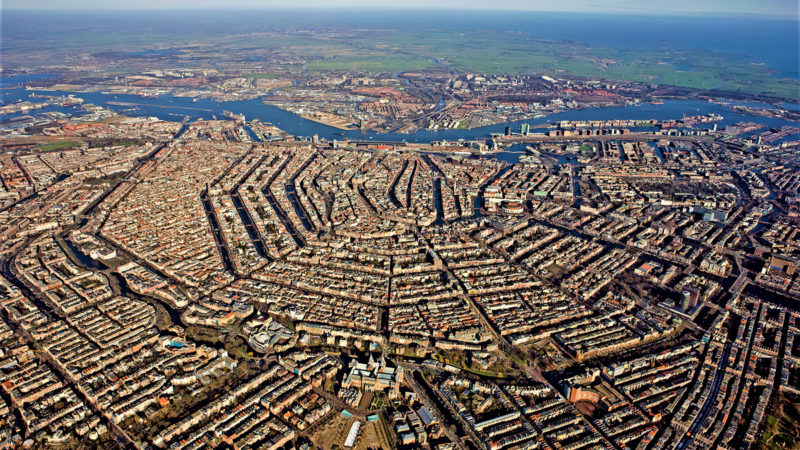
Amsterdam, located in the Netherlands, is the capital city and largest metropolitan area in the country. On 26 January 1955, the weather was cloudy. The date falls under the zodiac sign of Aquarius, and a full moon illuminated the night sky.
On this day
On 26 January 1949, the Hale Telescope at Palomar Observatory in California achieved first light, becoming the largest aperture optical telescope in the world for the next 28 years. This milestone represented a significant advance in astronomical observation and remained a landmark achievement in telescope engineering for nearly three decades.
In European history, the date marks the moment when Commodore Gordon Bremer took formal possession of Hong Kong Island for the United Kingdom at Possession Point in 1841, establishing British control over the territory that would shape regional geopolitics for generations. Additionally, on 26 January 1972, JAT Flight 367 exploded over Czechoslovakia, with flight attendant Vesna Vulović becoming the sole survivor after falling 10,160 metres without a parachute, an extraordinary feat that set a world record for the highest fall survived without parachute deployment.
DayAtlas provides comprehensive information for any date and location, including historical events, weather conditions, notable births and deaths, and astronomical data such as moon phases and zodiac signs.
Find out what's happening today in Amsterdam.
What the Weather Had in Store for Amsterdam on 27th November 2026
Contradictions are not errors but invitations to deeper thinking.
Fortune of the Day
26th January in the Stars – Star Sign Aquarius
Personality Profile
Personality People born on January 26th blend Capricorn's ambition with Mercury's sharp intellect. They think strategically, communicate persuasively, and approach life methodically. Behind their serious exterior lies quiet wit and genuine curiosity about ideas.
Strengths & Weaknesses Their greatest strength is tackling complex challenges with discipline and clarity. They struggle with emotional expression and can be overly critical of themselves and others. Perfectionism sometimes prevents them from embracing progress over flawlessness.
Love These individuals value partners who respect their need for intellectual engagement. They demonstrate affection through reliability and practical support rather than grand gestures. Long-term stability matters far more than romantic intensity.
Caree & Finance Career success comes through management, engineering, research, or analytical fields. Financial wisdom drives them toward steady, conservative wealth-building strategies. Their business instinct combines patience with calculated risk assessment.
Health Regular exercise combined with mental stimulation keeps them balanced and grounded. Tension accumulates in shoulders and neck from stress; deliberate relaxation is essential. Mental wellness matters as much as physical fitness.
That night, the moon was in its full moon phase.
Chinese year of the Goat (Wood).
Fun Facts About 26th January
Name Days in Your Language: Aubrey, Conan, Coner, Conner, Connor, Conor, Gonzalo, Paola, Paula, Paulette, Paulina, Pauline
Someone born on this day in 1955 would be 71 years old today — just 26,238 days into life, which is roughly 629,733 hours, 37,784,005 minutes, or 2,267,040,330 seconds spent on Earth so far.
It's the 26. day of the year. In 1955, 26th January falls on a Wednesday.
There are 339 days still to come.
We’re currently in Week 4 — the year marches on.
Famous Birthdays on 26th January
On this day, 9 notable people were born on 26th January — spanning from 1952 to 1958. From world leaders to artists and scientists, discover who shares this birthday.
26/01/1958
Anita Baker, American singer-songwriter
Anita Denise Baker is an American jazz and soul singer. She is known for her soulful ballads, particularly from the height of the quiet storm period in the 1980s.
Ellen DeGeneres, American comedian, actress, and talk show host
Ellen Lee DeGeneres is an American comedian, actress, television host, writer, and producer. She began her career in stand-up comedy in the early 1980s, gaining national attention with a 1986 appearance on The Tonight Show Starring Johnny Carson. She starred in the television sitcoms Ellen (1994–1998) and The Ellen Show (2001–2002). She also hosted the syndicated television talk show, The Ellen DeGeneres Show (2003–2022), for which she received 33 Daytime Emmy Awards.
26/01/1957
Road Warrior Hawk, American wrestler (died 2003)
Michael James "Mike" Hegstrand was an American professional wrestler. He was best known as Road Warrior Hawk, one half of the tag team known as the Road Warriors, with Road Warrior Animal. Outside of the Road Warriors, Hawk was a sporadic challenger for world heavyweight championships on pay-per-view from the late 1980s to the mid-1990s. He headlined the inaugural 1993 edition of Extreme Championship Wrestling's premier annual event, November to Remember.
26/01/1955
Eddie Van Halen, Dutch-American guitarist, songwriter, and producer (died 2020)
Edward Lodewijk Van Halen was an American musician and songwriter. He was the guitarist, keyboardist, backing vocalist, and the primary songwriter of the rock band Van Halen, which he founded with his brother Alex Van Halen in 1972, and the brothers were the only two constant members during the band's existence. He is widely regarded as one of the greatest guitarists in rock history.
26/01/1954
Kim Hughes, Australian cricketer
Kimberley John Hughes is a former cricketer who played for Western Australia, Natal and Australia. He captained Australia in 28 Test matches between 1979 and 1984 before captaining a rebel Australian team in a tour of South Africa, a country which at the time was subject to a sporting boycott opposing apartheid.
26/01/1953
Alik L. Alik, Micronesian politician, 7th Vice President of the Federated States of Micronesia
Alik L. Alik is a diplomat and politician from the Federated States of Micronesia who was the Vice President of the Federated States of Micronesia from May 11, 2007 to May 11, 2015.
Anders Fogh Rasmussen, Danish politician and diplomat, 39th Prime Minister of Denmark
Anders Fogh Rasmussen is a Danish politician who was the prime minister of Denmark from November 2001 to April 2009 and the secretary general of NATO from August 2009 to October 2014. He became founder of political consultancy Rasmussen Global and founded the Alliance of Democracies Foundation. He serves as a senior adviser to Citigroup. He also served as a senior advisor at the Boston Consulting Group.
Lucinda Williams, American singer-songwriter and guitarist
Lucinda Gayl Williams is an American singer-songwriter and a solo guitarist. She recorded her first two albums, Ramblin' on My Mind (1979) and Happy Woman Blues (1980), in a traditional country and blues style that received critical praise but little public or radio attention. In 1988, she released her third album, Lucinda Williams, to widespread critical acclaim. Regarded as "an Americana classic", the album also featured "Passionate Kisses", a song later recorded by Mary Chapin Carpenter for her 1992 album Come On Come On, which garnered Williams her first Grammy Award for Best Country Song in 1994. Williams released her fourth album, Sweet Old World, four years later in 1992. Sweet Old World was met with further critical acclaim and was voted the 11th best album of 1992 in The Village Voice's Pazz & Jop, an annual poll of prominent music critics. Robert Christgau, the poll's creator, ranked it 6th on his own year-end list, later writing that the album as well as Lucinda Williams were "gorgeous, flawless, brilliant".
26/01/1952
Tom Henderson, American basketball player
Thomas Edward Henderson is an American former professional basketball player in the National Basketball Association (NBA). He was born in Newberry, South Carolina.
Lives Remembered on 26th January
On 26th January, 89 remarkable people passed away — from 738 to 2025. Remember the lives and legacies of those we lost on this day.
26/01/2025
Suzanne Massie, American historian (born 1931)
Suzanne Liselotte Marguerite Massie was an American author specializing in Russian culture who played an important role in the relations between Ronald Reagan and the Soviet Union in the final years of the Cold War.
26/01/2020
John Altobelli, American college baseball coach (born 1963)
John Edward Altobelli was an American college baseball coach who worked for 27 seasons at Orange Coast College in Costa Mesa, California. During his career, Altobelli led the Pirates to four California state junior college titles and was named National Coach of the Year by the American Baseball Coaches Association in 2019. In January 2020, he, along with his wife Keri and daughter Alyssa, died in a helicopter crash in Calabasas, California, which also killed basketball player Kobe Bryant.
Gianna Bryant, American student-athlete (born 2006)
Gianna Maria-Onore Bryant, also known as Gigi Bryant and Mambacita, was an American student-athlete and the daughter of National Basketball Association (NBA) player Kobe Bryant and Vanessa Bryant. Raised in Newport Beach, California, Bryant was a competitive point guard who played for the Amateur Athletic Union (AAU) and Harbor Day School under the training and coaching of her father. A highly regarded prospect, she publicly aspired to play college basketball for the University of Connecticut Huskies and later play professionally in the Women's National Basketball Association (WNBA). She was widely recognized as the heir to her father's athletic legacy. Along with her father and seven others, Bryant died in a helicopter crash in January 2020 at the age of 13 while traveling to a youth basketball tournament at the Mamba Sports Academy.
Kobe Bryant, American basketball player (born 1978)
Kobe Bean Bryant was an American professional basketball player. Nicknamed "the Black Mamba", he played his entire 20-year career with the Los Angeles Lakers in the National Basketball Association (NBA). Bryant was a five-time NBA champion, a two-time NBA Finals MVP, the 2008 NBA MVP, and a two-time gold medal recipient on the 2008 and 2012 U.S. Olympic teams. Bryant is widely regarded as one of the greatest basketball players of all time.
26/01/2017
Mike Connors, American actor (born 1925)
Krekor Ohanian, known professionally as Mike Connors, was an American actor and film producer. He was best known for playing private detective Joe Mannix on the CBS television series Mannix from 1967 to 1975. This role earned him a Golden Globe Award in 1970, the first of six straight nominations, as well as four consecutive Primetime Emmy nominations from 1970 to 1973. He also starred in the short-lived series Tightrope! (1959–1960) and Today's FBI (1981–1982).
Tam Dalyell, Scottish politician (born 1932)
Sir Thomas Dalyell, 11th Baronet, known as Tam Dalyell, was a Scottish politician who served as Member of Parliament (MP) for Linlithgow from 1962 to 2005. A member of the Labour Party, he was best known for formulating what came to be known as the "West Lothian question", on whether non-English MPs should be able to vote upon English-only matters after political devolution. He was also known for his staunch anti-war views, opposing the Falklands War, the Gulf War, the War in Afghanistan and the Iraq War.
Lindy Delapenha, Jamaican footballer and sports journalist (born 1927)
Lloyd Lindbergh "Lindy" Delapenha was a Jamaican footballer and sports journalist. He was the first Jamaican to play professional football in England. Between 1948 and 1960, he played league football for Portsmouth, Middlesbrough and Mansfield Town. Despite limited appearances for Portsmouth in the 1948/1949 and 1949/1950 seasons, he nevertheless played a part in the club's two title-winning sides and with it became the first black player to win a First Division championship medal.
Barbara Hale, American actress (born 1922)
Barbara Hale was an American actress who portrayed legal secretary Della Street in the dramatic television series Perry Mason (1957–1966), earning her a 1959 Emmy Award for Outstanding Supporting Actress in a Drama Series. She reprised the role in 30 Perry Mason made-for-television movies (1985–1995).
Barbara Howard, Canadian sprinter and educator (born 1920)
Barbara Howard was a Canadian sprinter and educator. Growing up in Vancouver, British Columbia, Howard gained national media attention as a sprinter in high school when she completed a time trial that broke the standing British Empire Games record for the 100-yard dash. She was selected as a member of the Canadian track and field team for the 1938 British Empire Games, becoming the first Black woman to represent Canada in international athletic competition. Although she did not place in the 100-yard dash, she helped her team win silver and bronze in the 440-yard and 660-yard relay events. The outbreak of the Second World War meant that most international sporting events over the next decade were cancelled, and Howard's window of opportunity as a sprinter ended before she could compete again.
26/01/2016
Sahabzada Yaqub Khan, Pakistani military leader, foreign minister, and diplomat (born 1920)
Sahabzada Mohammad Yaqub Ali Khan SPk was a Pakistani politician, diplomat, military figure, linguist, and a retired 3-Star Officer in the Pakistani Army. "He was Pakistan's public face in international affairs for three decades" per The New York Times newspaper obituary.
Abe Vigoda, American actor (born 1921)
Abraham Vigoda was an American actor, known for his portrayals of Salvatore Tessio in The Godfather (1972) and Phil Fish in both Barney Miller and Fish (1977–1978). His career as an actor began in 1947 performing with the American Theatre Wing and continued in Broadway productions throughout the 1960s and 1970s.
26/01/2015
Cleven "Goodie" Goudeau, American art director and cartoonist (born 1932)
Cleven "Goodie" Goudeau was an art director and cartoonist, credited as originator of the first line of African American contemporary greeting cards. He held the record at one time for the longest card, and produced the first nationally published card featuring a Black Santa Claus.
Tom Uren, Australian politician (born 1921)
Thomas Uren was an Australian politician and Deputy Leader of the Australian Labor Party from 1975 to 1977. Uren served as the Member for Reid in the Australian House of Representatives from 1958 to 1990, being appointed Minister for Urban and Regional Development (1972–75), Minister for Territories and Local Government (1983–84) and Minister for Local Government and Administrative Services (1984–87). He helped establish the heritage and conservation movement in Australia and, in particular, worked to preserve the heritage of inner Sydney.
26/01/2014
Tom Gola, American basketball player, coach, and politician (born 1933)
Thomas Joseph Gola was an American basketball player and politician. Gola was inducted into the Naismith Memorial Basketball Hall of Fame in 1976 and the National Collegiate Basketball Hall of Fame in 2006. He is widely considered one of the greatest NCAA basketball players of all time, playing four years with the La Salle Explorers. Gola was a consensus first-team All-American for three consecutive years. He has held the record for the most total rebounds in NCAA history since 1955, and was the first college player to have over 2,000 points and 2,000 rebounds in a career. Gola was the Helms Foundations College Basketball Player of the Year in 1954, and the United Press Player of the Year in 1955, as well as being the highest vote recipient for the Associated Press' 1955 All-America Team. He was selected the most valuable player in the 1952 National Invitation Tournament and the 1954 NCAA basketball tournament.
Paula Gruden, Slovenian-Australian poet and translator (born 1921)
Paula Gruden or Pavla Gruden was an Australian poet, translator, and editor of Slovene descent.
José Emilio Pacheco, Mexican poet and author (born 1939)
José Emilio Pacheco Berny was a Mexican poet, essayist, novelist and short story writer. He is regarded as one of the major Mexican poets of the second half of the 20th century. The Berlin International Literature Festival has praised him as "one of the most significant contemporary Latin American poets". In 2009, he was awarded the Cervantes Prize for his literary oeuvre.
26/01/2013
Christine M. Jones, American educator and politician (born 1929)
Christine M. Jones was an American politician who represented District 26 in the Maryland House of Delegates.
Stefan Kudelski, Polish-Swiss engineer, inventor of the Nagra (born 1929)
Stefan Kudelski was a Polish audio engineer known for creating the Nagra series of professional audio recorders.
Padma Kant Shukla, Indian physicist and academic (born 1950)
Padma Kant Shukla was a distinguished Professor and first International Chair of the Physics and Astronomy Department of Ruhr-University Bochum in Germany. He was also the director of the International Centre for Advanced Studies in Physical Sciences at Ruhr-University Bochum. He held a PhD in physics from Banaras Hindu University in Varanasi, India and a second doctorate in Theoretical Plasma Physics from Umeå University in Sweden.
Shōtarō Yasuoka, Japanese author (born 1920)
Shōtarō Yasuoka was a Japanese writer.
26/01/2012
Roberto Mieres, Argentinian race car driver (born 1924)
Roberto Casimiro Mieres Dasso was a racing driver from Mar del Plata, Argentina. He participated in 17 Formula One World Championship Grands Prix, debuting on 7 June 1953. He scored a total of 13 championship points.
26/01/2011
David Kato Kisule, Ugandan teacher and LGBT rights activist, considered a father of Uganda's gay rights movement (born 1964)
David Kato Kisule was a Ugandan teacher and LGBT rights activist, considered a father of Uganda's gay rights movement and described as "Uganda's first openly gay man". He served as advocacy officer for Sexual Minorities Uganda (SMUG).
Charlie Louvin, American singer-songwriter and guitarist (born 1927)
Charles Elzer Loudermilk, known professionally as Charlie Louvin, was an American country music singer and songwriter. He is best known as one of the Louvin Brothers, and was a member of the Grand Ole Opry since 1955.
26/01/2010
Louis Auchincloss, American novelist and essayist (born 1917)
Louis Stanton Auchincloss was an American lawyer, novelist, historian and essayist. He is best known as a novelist who parlayed his experiences into books exploring the experiences and psychology of American polite society and old money.
26/01/2008
Viktor Schreckengost, American sculptor and designer (born 1906)
Viktor Schreckengost was an American industrial designer as well as a teacher, sculptor, and artist. His wide-ranging work included noted pottery designs, industrial design, bicycle design and seminal research on radar feedback. Schreckengost's peers included designers Raymond Loewy, Norman Bel Geddes, Eva Zeisel, and Russel Wright.
George Habash, Palestinian politician, founder of the PFLP (born 1926)
George Habash was a Palestinian politician and physician who was the founder and first general-secretary of the Popular Front for the Liberation of Palestine (PFLP) from 1967 to 2000.
26/01/2007
Gump Worsley, Canadian ice hockey player (born 1929)
Lorne John "Gump" Worsley was a Canadian professional ice hockey goaltender. Born and raised in Montreal, Quebec, 'Gump' was given his nickname because friends thought he looked like a comic-strip character Andy Gump.
26/01/2006
Khan Abdul Wali Khan, Pakistani politician (born 1917)
Khan Abdul Wali Khan was a Pakistani politician who served as president of the National Awami Party from 1967 till its dissolution in 1986, and then of the Awami National Party, a left wing Pashtun nationalist federalist party. He was the Leader of the Opposition twice, from 1972 to 1975 and from 1988 to 1990. A political rival of Zulfikar Ali Bhutto, he led the Pakistan National Alliance, and then a nationwide uprising, against the Pakistan Peoples Party in the 1977 parliamentary election.
26/01/2004
Fred Haas, American golfer (born 1916)
Frederick Theodore Haas Jr. was an American professional golfer.
26/01/2003
Valeriy Brumel, Russian high jumper (born 1942)
Valeriy Nikolayevich Brumel was a Soviet-Russian high jumper. The 1964 Olympic champion and multiple world record holder, he is regarded as one of the greatest athletes ever to compete in the high jump. His international career was ended by a motorcycle crash in 1965.
Hugh Trevor-Roper, English historian and academic (born 1917)
Hugh Redwald Trevor-Roper, Baron Dacre of Glanton was an English historian. He was Regius Professor of Modern History at the University of Oxford.
George Younger, 4th Viscount Younger of Leckie, Scottish banker and politician, Secretary of State for Scotland (born 1931)
George Kenneth Hotson Younger, 4th Viscount Younger of Leckie, Baron Younger of Prestwick, was a British Conservative Party politician and banker. He was the Member of Parliament (MP) for Ayr from 1964 to 1992. During the premiership of Margaret Thatcher, Younger served as Secretary of State for Scotland from 1979 to 1986, and as Secretary of State for Defence from 1986 to 1989.
26/01/2001
Al McGuire, American basketball player and coach (born 1928)
Alfred James McGuire was an American college basketball coach and broadcaster, the head coach at Marquette University from 1964 to 1977. He won a national championship in his final season at Marquette, and was inducted into the Naismith Memorial Basketball Hall of Fame in 1992. He was also well known as a longtime national television basketball broadcaster and for his colorful personality.
26/01/2000
Don Budge, American tennis player and coach (born 1915)
John Donald Budge was an American tennis player. He is most famous as the first tennis player—male or female—to win all four Grand Slam tournaments in one year and complete the Grand Slam. Budge was the second man to complete the career Grand Slam, after Fred Perry. He won ten majors, of which six were Grand Slam events and four Pro Slams, the latter achieved on three different surfaces. Budge is considered to have had one of the best backhands in the history of tennis, with most observers rating it better than that of later player Ken Rosewall.
Kathleen Hale, English author and illustrator (born 1898)
Kathleen Hale OBE was a British artist, illustrator, and children's author. She is best remembered for her series of books about Orlando the Marmalade Cat.
A. E. van Vogt, Canadian-American author (born 1912)
Alfred Elton van Vogt was a Canadian-born American science fiction writer. His fragmented, bizarre narrative style influenced later science fiction writers, including Philip K. Dick. He was one of the most popular and influential practitioners of science fiction in the mid-twentieth century, the genre's so-called Golden Age, and one of the most complex. The Science Fiction Writers of America named him their 14th Grand Master in 1995.
26/01/1997
Jeane Dixon, American astrologer and psychic (born 1904)
Jeane Dixon was one of the best-known American psychics and astrologers of the 20th century, owing to her alleged prediction of the assassination of President John F. Kennedy, her syndicated newspaper astrology column, some well-publicized predictions, and a best-selling biography.
26/01/1996
Harold Brodkey, American author and academic (born 1930)
Harold Brodkey, born Aaron Roy Weintraub, was an American short story writer and novelist.
Frank Howard, American football player and coach (born 1909)
Frank J. Howard was an American college football player and coach. He played college football for Alabama. After a career-ending injury, Howard joined the staff at Clemson College and became head coach in 1940. Howard coached the Clemson Tigers for 30 years, amassing the 15th most wins of any college football coach. He led Clemson to ten bowl games, an undefeated season in 1948, and several top-20 rankings during his tenure as head coach. During his stay at Clemson, Howard also oversaw the athletic department, ticket sales, and was an assistant coach for the baseball team. He was inducted into the College Football Hall of Fame, the South Carolina Sports Hall of Fame, the Alabama Sports Hall of Fame and the Clemson Ring of Honor. The playing surface at Clemson's Memorial Stadium is named after him.
Henry Lewis, American bassist and conductor (born 1932)
Henry Jay Lewis was an American double-bassist and orchestral conductor whose career extended over four decades. A child prodigy, he joined the Los Angeles Philharmonic at age 16, becoming the first African-American instrumentalist in a major symphony orchestra and, later, the first African-American symphony orchestra conductor in the United States. As musical director of the Seventh Army Symphony Orchestra, he supported America's cultural diplomacy initiatives in Europe after World War II.
26/01/1993
Jan Gies, Dutch businessman and humanitarian (born 1905)
Jan Augustus Gies was a member of the Dutch Resistance who, with his wife, Miep, helped hide Anne Frank, her sister Margot, their parents Otto and Edith, the van Pels family, and Fritz Pfeffer from Nazi persecution during the occupation of the Netherlands by aiding them as they resided in the Secret Annex.
Jeanne Sauvé, Canadian journalist and politician, Governor General of Canada (born 1922)
Jeanne Mathilde Sauvé was a Canadian politician, journalist and stateswoman who served as the 23rd governor general of Canada from 1984 to 1990 and as the 29th speaker of the House of Commons from 1980 to 1984. She was the first woman to hold either office, and is to date the only woman to serve as speaker of the House of Commons.
26/01/1992
José Ferrer, Puerto Rican-American actor (born 1912)
José Vicente Ferrer de Otero y Cintrón was a Puerto Rican actor and director of stage, film and television. He was one of the most celebrated and esteemed Hispanic American actors during his lifetime and after, with a career spanning nearly 60 years between 1935 and 1992. He achieved prominence for his portrayal of Cyrano de Bergerac in the play of the same name, which earned him the inaugural Tony Award for Best Actor in a Play in 1947. He reprised the role in a 1950 film version and won an Academy Award for Best Actor, making him both the first Hispanic and the first Puerto Rican–born actor to win an Academy Award.
26/01/1990
Lewis Mumford, American sociologist and historian (born 1895)
Lewis Mumford was an American historian, sociologist, philosopher of technology, and literary critic. Particularly noted for his study of cities and urban architecture, he had a broad career as a writer. He made significant contributions to social philosophy, American literary and cultural history, and the history of technology.
26/01/1986
Ruben Nirvi, Finnish linguist and professor (born 1905)
Ruben Erik Nirvi was a Finnish linguist. He was the deputy of Finnish philology at the University of Helsinki from 1955 to 1957 and the personal additional professor of the Finnish language from 1957 to 1972. He was a special expert on Finnish, especially the Ingrian dialects. He defended his thesis Sanankieltoja ja niihin liittyviä kielenilmiöitä itämerensuomalaisissa kielissä: Riista- ja kotieläintalous.
26/01/1985
Kenny Clarke, American jazz drummer and bandleader (born 1914)
Kenneth Clarke Spearman, known professionally as Kenny Clarke and nicknamed Klook, was an American jazz drummer and bandleader. A major innovator of the bebop style of drumming, he pioneered the use of the ride cymbal to keep time rather than the hi-hat, along with the use of the bass drum for irregular accents.
26/01/1983
Bear Bryant, American football player and coach (born 1913)
Paul William "Bear" Bryant was an American college football player and coach. He is considered by many to be one of the greatest college football coaches of all time, and best known as the head coach of the University of Alabama football team, the Alabama Crimson Tide, from 1958 to 1982. During his 25-year tenure as Alabama's head coach, he amassed six national championships and 13 conference championships. Upon his retirement in 1982, he held the record for the most wins (323) as a head coach in collegiate football history. The Paul W. Bryant Museum, Paul W. Bryant Hall, Paul W. Bryant Drive, and Saban Field at Bryant–Denny Stadium are all named in his honor at the University of Alabama in Tuscaloosa.
26/01/1979
Nelson Rockefeller, American businessman and politician, 41st Vice President of the United States (born 1908)
Nelson Aldrich Rockefeller was the 41st vice president of the United States, serving from 1974 to 1977 under President Gerald Ford. A member of the Republican Party and the wealthy Rockefeller family, he was the 49th governor of New York from 1959 to 1973. He was the leader of the moderate faction of his party, known as the Rockefeller Republicans.
26/01/1977
Dietrich von Hildebrand, German Catholic philosopher and author (born 1889)
Dietrich Richard Alfred von Hildebrand was a German Catholic philosopher and religious writer.
26/01/1976
João Branco Núncio, Portuguese bullfighter (born 1901)
João Alves Branco Núncio was a Portuguese bullfighter. He was born in Alcácer do Sal, in a whitewashed house next to that of his uncle, the Viscount of Alcácer do Sal. Today it belongs to the Viscount's Philharmonic Friendship Society.
26/01/1973
Edward G. Robinson, Romanian-American actor (born 1893)
Edward Goldenberg Robinson was an American actor who was popular during Hollywood's Golden Age. After making his stage debut in 1913, he rose to stardom with his performance as the title character in Little Caesar (1931) and became well known for his portrayals of gangsters. He starred in a variety of films, including the biopics Dr. Ehrlich's Magic Bullet and A Dispatch from Reuters and the film noirs Double Indemnity and The Woman in the Window.
26/01/1968
Merrill C. Meigs, American publisher (born 1883)
Merrill Church Meigs was the publisher of the Chicago Herald and Examiner in the 1920s. Inspired to become a pilot by Charles Lindbergh's solo flight across the Atlantic Ocean, he became a booster of Chicago as a world center of aviation. He gave flying lessons to President Harry S. Truman.
26/01/1962
Lucky Luciano, Italian-American mob boss (born 1897)
Charles "Lucky" Luciano was an Italian mafioso who operated mainly in the United States. He started his criminal career in New York City's Five Points Gang and was instrumental in the development of the National Crime Syndicate. Luciano is considered the father of the Italian-American Mafia for the establishment of the Commission in 1931, after he abolished the capo dei capi title held by Salvatore Maranzano following the Castellammarese War. He was also the first official boss of the modern Genovese crime family.
26/01/1953
Athanase David, Canadian lawyer and politician (born 1882)
Louis-Athanase David was a Canadian lawyer, politician, and businessman. He was a cabinet minister in the Provincial Parliament of Quebec, representing the riding of Terrebonne and serving as Provincial Secretary. In this position, he created Quebec's first cultural policy. He was later a member of the Canadian Senate.
26/01/1948
Fred Conrad Koch, American biochemist and endocrinologist (born 1876)
Frederick Conrad Koch was an American biochemist and endocrinologist. Born in Chicago, Illinois, Koch graduated from the University of Illinois in 1899. He was affiliated with the University of Chicago from 1912 to 1941, serving as chairman of the department of biochemistry from 1936 to 1941. He retired as professor emeritus, and was director of biomedical research at Armour and Company. He was known primarily for his work on male sex hormones and testicular function. He served as the 19th president of the Endocrine Society, which in 1957 established the Fred Conrad Koch Lifetime Achievement Award, the society's highest honor.
26/01/1947
Grace Moore, American soprano and actress (born 1898)
Mary Willie Grace Moore was an American operatic lyric soprano and actress in musical theatre and film. She was nicknamed the "Tennessee Nightingale." Her films helped to popularize opera by bringing it to a larger audience. She was nominated for the Academy Award for Best Actress for her performance in One Night of Love.
26/01/1946
Adriaan van Maanen, Dutch-American astronomer and academic (born 1884)
Adriaan van Maanen was a Dutch-American astronomer. Born in Friesland, he studied astronomy at the University of Utrecht, earning his Ph.D. in 1911, and worked briefly at the University of Groningen. In 1911, he came to the United States to work as a volunteer in an unpaid capacity at Yerkes Observatory. Within a year he got a position at the Mount Wilson Observatory, where he remained active until his death in 1946.
26/01/1943
Harry H. Laughlin, American sociologist and eugenicist (born 1880)
Harry Hamilton Laughlin was an American educator and eugenicist. He served as the superintendent of the Eugenics Record Office from its inception in 1910 to its closure in 1939, and was among the most active individuals influencing American eugenics policy, especially compulsory sterilization legislation.
Nikolai Vavilov, Russian botanist and geneticist (born 1887)
Nikolai Ivanovich Vavilov was a Russian and Soviet agronomist, botanist and geneticist who identified the centers of origin of cultivated plants. His research focused on improvement of wheat, maize and other cereal crops.
26/01/1932
William Wrigley Jr., American businessman, founded the Wrigley Company (born 1861)
William Mills Wrigley Jr. was an American chewing gum industrialist. He founded the Wm. Wrigley Jr. Company in 1891.
26/01/1920
Jeanne Hébuterne, French painter and author (born 1898)
Jeanne Hébuterne was a French painter and art model best known as the frequent subject and common-law wife of the artist Amedeo Modigliani. She died by suicide two days after Modigliani's death, and is now buried beside him.
26/01/1904
Whitaker Wright, English businessman (born 1846)
James Whitaker Wright was a company promoter and swindler, who committed suicide at the Royal Courts of Justice in London immediately following his conviction for fraud.
26/01/1896
James Edwin Campbell, American educator, school administrator, newspaper editor, poet, and essayist (born 1867)
James Edwin Campbell was an American educator, school administrator, newspaper editor, poet, and essayist. Campbell was the first principal of the West Virginia Colored Institute from 1892 until 1894, and is considered by the university as its first president.
26/01/1895
Arthur Cayley, English mathematician and academic (born 1825)
Arthur Cayley was an English mathematician who worked mostly on algebra. He helped found the modern British school of pure mathematics, and was a professor at Trinity College, Cambridge for 35 years.
26/01/1893
Abner Doubleday, American general (born 1819)
Abner Doubleday was a career United States Army officer and Union major general in the American Civil War. He fired the first shot in defense of Fort Sumter, the opening battle of the war, and had a pivotal role in the early fighting at the Battle of Gettysburg. Gettysburg was his finest hour, but his relief by Maj. Gen. George Meade caused lasting enmity between the two men. In San Francisco, after the war, he obtained a patent on the cable car railway that still runs there. In his final years in New Jersey, he was a prominent member and later president of the Theosophical Society.
26/01/1891
Nicolaus Otto, German engineer, invented the internal combustion engine (born 1833)
Nicolaus August Otto was a German engineer who successfully developed the compressed charge internal combustion engine which ran on petroleum gas and led to the modern internal combustion engine. The Association of German Engineers (VDI) created DIN standard 1940 which says "Otto Engine: internal combustion engine in which the ignition of the compressed fuel-air mixture is initiated by a timed spark", which has been applied to all engines of this type since.
26/01/1887
Anandi Gopal Joshi, one of the first female Indian physicians (born 1865)
Anandibai Gopalrao Joshi was the first certified Indian female doctor of western medicine while Kadambini Ganguly was the first Indian female doctor who actually practiced. Both got their degree in western medicine in 1886.
26/01/1886
David Rice Atchison, American general and politician (born 1807)
David Rice Atchison was a mid-19th-century Democratic United States Senator from Missouri. He served as president pro tempore of the United States Senate for six years. Atchison served as a major general in the Missouri State Militia in 1838 during Missouri's Mormon War and as a Confederate brigadier general during the American Civil War under Major General Sterling Price in the Missouri Home Guard. Some of Atchison's associates claimed that for 24 hours—Sunday, March 4, 1849, through noon on Monday—he may have been acting president of the United States. This belief, however, is dismissed by most scholars.
26/01/1885
Edward Davy, English-Australian physician and engineer (born 1806)
Edward Davy was an English physician, scientist, and inventor who played a prominent role in the development of telegraphy, and invented an electric relay.
Charles George Gordon, English general and politician (born 1833)
Major-General Charles George Gordon CB, also known as Chinese Gordon, Gordon Pasha, Gordon of Khartoum and General Gordon, was a British Army officer and administrator. He saw action in the Crimean War as an officer in the British Army. He made his military reputation in China, where he was placed in command of the "Ever Victorious Army", a force of Chinese soldiers led by European officers that was instrumental in putting down the Taiping Rebellion, regularly defeating much larger forces. For these accomplishments, he was given the nickname "Chinese Gordon" and honours from both the Emperor of China and the British.
26/01/1869
Duncan Gordon Boyes, English soldier; Victoria Cross recipient (born 1846)
Duncan Gordon Boyes VC was an English recipient of the Victoria Cross, the highest and most prestigious award for gallantry in the face of the enemy that can be awarded to British and Commonwealth forces. The award was bestowed upon him for his actions during the Shimonoseki Expedition, Japan in 1864. He was later discharged from naval service as a result of ill-discipline and moved to New Zealand to work on his family's sheep station. Suffering from depression and alcoholism, he committed suicide at the age of 22 in Dunedin.
26/01/1860
Wilhelmine Schröder-Devrient, opera singer (born 1804)
Wilhelmine Schröder-Devrient, was a German operatic soprano. As a singer, she combined a rare quality of tone with dramatic intensity of expression, which was as remarkable on the concert platform as in opera.
26/01/1855
Gérard de Nerval, French poet and translator (born 1808)
Gérard de Nerval was the pen name of Gérard Labrunie, a French writer of poetry and prose, essayist, and translator. He was a major figure during the era of French romanticism, and best known for his novellas and poems, especially the collection Les Filles du feu, which included the novella Sylvie and the poem "El Desdichado". Through his translations, Nerval played a major role in introducing French readers to the works of German Romantic authors, including Klopstock, Schiller, Bürger and Goethe. His later work merged poetry and journalism in a fictional context and influenced Marcel Proust. His last novella, Aurélia ou le rêve et la vie, influenced André Breton and Surrealism.
26/01/1849
Thomas Lovell Beddoes, English poet, playwright, and physician (born 1803)
Thomas Lovell Beddoes was an English poet, dramatist and physician.
26/01/1830
Filippo Castagna, Maltese politician (born 1765)
Filippo Castagna was a Maltese politician of the late 18th and early 19th centuries.
26/01/1824
Théodore Géricault, French painter and lithographer (born 1791)
Jean-Louis André Théodore Géricault was a French painter and lithographer. His best-known painting is The Raft of the Medusa. Despite his short life, he was one of the pioneers of the Romantic movement.
26/01/1823
Edward Jenner, English physician and immunologist, creator of the smallpox vaccine (born 1749)
Edward Jenner was an English physician and scientist who pioneered the concept of vaccines and created the smallpox vaccine, the world's first vaccine. The terms vaccine and vaccination are derived from Variolae vaccinae, the term devised by Jenner to denote cowpox. He used it in 1798 in the title of his Inquiry into the Variolae vaccinae known as the Cow Pox, in which Jenner described the protective effect of cowpox against smallpox.
26/01/1814
Manuel do Cenáculo, Portuguese prelate and antiquarian (born 1724)
Dom Frei Manuel do Cenáculo, T.O.R. was a Portuguese Franciscan prelate, who served as the first Bishop of Beja (1770–1802) and as Archbishop of Évora (1802–1814).
26/01/1799
Gabriel Christie, Scottish general (born 1722)
Gabriel Christie was a British Army General from Scotland, who settled in Montreal after the Seven Years' War. Following the British Conquest of New France, he invested in land and became one of the largest landowners in the British Province of Quebec.
26/01/1795
Johann Christoph Friedrich Bach, German harpsichord player and composer (born 1732)
Johann Christoph Friedrich Bach was a German composer and harpsichordist, the fifth son of Johann Sebastian Bach, sometimes referred to as the "Bückeburg Bach".
26/01/1750
Albert Schultens, Dutch philologist and academic (born 1686)
Albert Schultens was a Dutch philologist.
26/01/1744
Ludwig Andreas von Khevenhüller, Austrian field marshal (born 1683)
Ludwig Andreas von Khevenhüller, Graf von Frankenburg-Aichleberg was a prominent Austrian field marshal.
26/01/1697
Georg Mohr, Danish mathematician and theorist (born 1640)
Jørgen Mohr was a Danish mathematician, known for being the first to prove the Mohr–Mascheroni theorem, which states that any geometric construction which can be done with compass and straightedge can also be done with compasses alone.
26/01/1641
Lawrence Hyde, English lawyer (born 1562)
Sir Lawrence Hyde II was an English lawyer who was Attorney-general to the consort of King James I, Anne of Denmark. He sat in the House of Commons at various times between the years 1584 and 1611.
26/01/1630
Henry Briggs, English mathematician and astronomer (born 1556)
Henry Briggs was an English mathematician notable for changing the original logarithms invented by John Napier into common logarithms, which are sometimes known as Briggsian logarithms in his honor. The specific algorithm for long division in modern use was introduced by Briggs c. 1600 AD.
26/01/1620
Amar Singh I, ruler of Mewar (born 1559)
Maharana Amar Singh I the Sisodia-Rajput ruler of the Mewar Kingdom, was the eldest son and successor of Maharana Pratap I. He was the 14th Rana of Mewar, ruling from 19 January 1597 until his death on 26 January 1620.
26/01/1567
Nicholas Wotton, English courtier and diplomat (born 1497)
Nicholas Wotton was an English diplomat, cleric and courtier. He served as Dean of York and Royal Envoy to Charles V, Holy Roman Emperor.
26/01/1390
Adolph IX, Count of Holstein-Kiel (born c. 1327)
Adolph IX, Count of Holstein-Kiel, also known as Adolph VII, was count of Holstein-Kiel and Holstein-Plön from 1359 until his death.
26/01/0738
John of Dailam, Syrian monk and saint (born 660)
Saint John of Dailam, was a 7th-century East Syriac Christian saint and monk, who founded several monasteries in Mesopotamia and Persia.
Celebrations & Special Days Worldwide on 26th January
Christian feast day: Saint Alberic of Cîteaux
Alberic of Cîteaux, sometimes known as Aubrey of Cîteaux, was a French monk and abbot, one of the founders of the Cistercian Order. He is now honored as a saint.
Christian feast day: Blessed Gabriele Allegra
Gabriele Allegra was a Franciscan friar and Biblical scholar. He is best known for accomplishing the first complete translation of the Bible into the Chinese language. His Studium Biblicum Translation is often considered the definitive Chinese Bible among Catholics. He was beatified in 2012.
Christian feast day: Saint Paula of Rome
Paula of Rome was an ancient Roman Christian saint and early Desert Mother. A member of one of the richest senatorial families which claimed descent from Agamemnon, Paula was the daughter of Blesilla and Rogatus, from the great clan of the noble Furii Camilli. At the age of 16, Paula was married to the nobleman Toxotius, with whom she had four daughters, Saint Blaesilla, Paulina, Saint Eustochium, and Rufina. She also had a boy, also named Toxotius. She was a disciple of Saint Jerome, Doctor of the Church, and was one of the first abbesses of a convent of nuns.
Christian feast day: Saint Timothy
Timothy was an early Christian evangelist and the first Bishop of Ephesus, whom the Acts of Timothy relates died around AD 97.
Christian feast day: Saint Titus
Titus was an early Christian missionary and church leader, a companion and disciple of Paul the Apostle, mentioned in several of the Pauline epistles including the Epistle to Titus. He is believed to be a Gentile converted to Christianity by Paul and, according to tradition, he was consecrated as Bishop of the Island of Crete.
Christian feast day: January 26 (Eastern Orthodox liturgics)
January 26 in Eastern Orthodox liturgical calendars is a feast day and a day of commemoration of saints and martyrs. Although some Orthodox churches use the Revised Julian Calendar and others use the traditional Julian calendar, the fixed commemorations for their respective January 26 are broadly the same, no matter which calendar is used.
Australia Day (Australia)
Australia Day is the official national day of Australia. Observed annually on 26 January, it marks the 1788 landing of the First Fleet and raising of the Union Flag of Great Britain by Arthur Phillip at Sydney Cove, a small bay on the southern shore of Sydney Harbour. The day is promoted by the Australia Day Council, an independent government owned company. Events are run to recognise the contributions of Australians to the nation, while also encouraging reflection on the country's history and reconciliation with Indigenous Australians, and respecting the diversity and achievements of Australian society. The presentation of community awards and citizenship ceremonies are also commonly held on the day. The holiday is marked by the presentation of the Australian of the Year Awards on Australia Day Eve, announcement of the Australia Day Honours list and addresses from the governor-general and prime minister. It is an official public holiday in every state and territory. With community festivals, concerts and citizenship ceremonies, the day is celebrated in large and small communities and cities around the nation. Australia Day has become the biggest annual civic event in Australia.
Republic Day (India)
Republic Day is a national holiday in India commemorating the adoption of the Constitution of the Republic of India and the country's transition to a republic which came into effect on 26 January 1950.
What Happened on 26th January?
49 significant events took place on Wednesday, 26th January — stretching from 661 to 2021. Explore the moments that shaped history on this day.
26/01/2021
Protesters and farmers storm the Red Fort near Delhi, clashing with police. One protester is killed and more than 80 police officers are injured.
The 2021 Farmers' Republic Day protest was a protest on 26 January 2021 at Delhi. Part of the 2020–2021 Indian farmers' protest. The protestors deviated from the parade to take the parade towards Red Fort. The protest took place on the 72nd Republic Day against the decision by Narendra Modi-led National Democratic Alliance (NDA) to implement three farm acts.
26/01/2020
A Sikorsky S-76B flying from John Wayne Airport to Camarillo Airport crashes in Calabasas, 30 miles west of Los Angeles, killing all nine people on board, including five-time NBA champion Kobe Bryant and his daughter Gianna Bryant.
The Sikorsky S-76 is a medium-size commercial utility helicopter designed and produced by the American helicopter manufacturer Sikorsky Aircraft. It is the company's first helicopter specifically developed for the civilian market.
26/01/2015
An aircraft crashes at Los Llanos Air Base in Albacete, Spain, killing 11 people and injuring 21 others.
On 26 January 2015, an F-16D Fighting Falcon jet fighter of the Hellenic Air Force crashed into a flight line shortly after take-off at Los Llanos Air Base in Albacete, Spain, killing 11 people: the two crew members and nine personnel on the ground. Thirty-three others, all on the ground, were injured.
Syrian civil war: The People's Protection Units (YPG) recaptures the city of Kobanî from the Islamic State of Iraq and the Levant (ISIL), marking a turning point in the Siege of Kobanî.
The Syrian civil war was an armed conflict that began with the Syrian revolution in March 2011, when popular discontent with the Ba'athist regime ruled by Bashar al-Assad triggered large-scale protests and pro-democracy rallies across Syria, as part of the wider Arab Spring. The Assad regime responded to the protests with lethal force, which led to a series of defections, the emergence of armed opposition groups, and the civilian uprising descending into a civil war. The war lasted almost 14 years and culminated in the fall of the Assad regime in December 2024. Many sources regard this as the end of the civil war even though clashes have continued into 2026.
26/01/2009
Rioting breaks out in Antananarivo, Madagascar, sparking a political crisis that will result in the replacement of President Marc Ravalomanana with Andry Rajoelina.
Antananarivo, also known by its colonial shorthand form Tana, is the capital and largest city of Madagascar. The administrative area of the city, known as Antananarivo-Renivohitra, is the capital of Analamanga region.
Nadya Suleman gives birth to the world's first surviving octuplets.
Natalie Denise Suleman, known as Octomom in the media, is an American media personality who came to international attention when she gave birth to the first surviving octuplets in January 2009. The circumstances of their high-order multiple birth led to controversy in the field of assisted reproductive technology as well as an investigation by the Medical Board of California of the fertility specialist involved.
26/01/2001
The 7.7 Mw Gujarat earthquake shakes Western India, leaving 13,805–20,023 dead and about 166,800 injured.
Seismic magnitude scales are used to describe the overall strength or "size" of an earthquake. These are distinguished from seismic intensity scales that categorize the intensity or severity of ground shaking (quaking) caused by an earthquake at a given location. Magnitudes are usually determined from measurements of an earthquake's seismic waves as recorded on a seismogram. Magnitude scales vary based on what aspect of the seismic waves are measured and how they are measured. Different magnitude scales are necessary because of differences in earthquakes, the information available, and the purposes for which the magnitudes are used.
Diane Whipple, a lacrosse coach, is killed in a dog attack in San Francisco. The resulting court case clarified the meaning of implied malice murder.
Diane Alexis Whipple was an American lacrosse player and college coach. She was killed in a dog attack in San Francisco on January 26, 2001. The dogs involved were two Presa Canarios belonging to Paul Schneider, a high-ranking member of the Aryan Brotherhood serving three life sentences in state prison. The dogs were looked after by Schneider's attorneys, Robert Noel and Marjorie Knoller, a married couple that lived in the same apartment building as Whipple. After the fatal attack, the state brought criminal charges against the attorneys. Noel, who was not present during the attack, was convicted of manslaughter. Knoller, who was present, was charged with implied-malice second-degree murder and convicted by the jury. Knoller's murder conviction, an unusual result for an unintended dog attack, was rejected by the trial judge but ultimately upheld. The case clarified the meaning of implied-malice murder.
26/01/1998
Lewinsky scandal: On American television, U.S. President Bill Clinton denies having had "sexual relations" with former White House intern Monica Lewinsky.
A sex scandal involving Bill Clinton, the 42nd president of the United States, and Monica Lewinsky, a White House intern, erupted in 1998. Their sexual relationship began in 1995—when Clinton was 49 years old and Lewinsky was 22 years old—and lasted 18 months, ending in 1997. Clinton ended televised remarks on January 26, 1998, with the later infamous statement: "I did not have sexual relations with that woman, Ms. Lewinsky." Further investigation led to charges of perjury and to the impeachment of Clinton in December 1998 by the U.S. House of Representatives. In February 1999, he was subsequently acquitted on both impeachment charges of perjury and obstruction of justice in a 21-day U.S. Senate trial.
26/01/1991
Mohamed Siad Barre is removed from power in Somalia, ending centralized government, and is succeeded by Ali Mahdi.
Mohammed Siad Barre was a Somali military officer, politician, and revolutionary who served as the third president of Somalia from 21 October 1969 to 26 January 1991.
26/01/1986
The Ugandan government of Tito Okello is overthrown by the National Resistance Army, led by Yoweri Museveni.
Tito Lutwa Okello was a Ugandan military officer and politician who served as the president of Uganda from 29 July 1985 until 26 January 1986.
26/01/1974
Turkish Airlines Flight 301 crashes during takeoff from Izmir Cumaovası Airport (now İzmir Adnan Menderes Airport), killing 66 of the 73 people on board the Fokker F28 Fellowship.
Turkish Airlines Flight 301 was a passenger flight operated by a Fokker F28-1000 Fellowship of Turkish Airlines that crashed during takeoff at İzmir Cumaovası Airport on 26 January 1974 while en route to Istanbul Yeşilköy Airport, killing 67 of its 73 passengers and crew.
26/01/1972
JAT Flight 367 is destroyed by a terrorist bomb, killing 27 of the 28 people on board the DC-9. Flight attendant Vesna Vulović survives with critical injuries.
JAT Flight 367 was a McDonnell Douglas DC-9-32 aircraft which exploded shortly after overflying NDB Hermsdorf, Germany, while en route from Stockholm, Sweden, to Belgrade, SFR Yugoslavia, on 26 January 1972. The aircraft, piloted by Captain Ludvik Razdrih and First Officer Ratko Mihić, broke into three pieces and spun out of control, crashing near the village of Srbská Kamenice in Czechoslovakia. Of the 28 on board, 27 were killed upon ground impact and one Serbian crew member, Vesna Vulović (1950–2016), survived. She holds the Guinness world record for surviving the highest fall without a parachute at 10,160 m (33,330 ft).
26/01/1966
The three Beaumont children disappear from a beach in Glenelg, South Australia, resulting in one of the country's largest-ever police investigations.
Jane Nartare Beaumont, Arnna Kathleen Beaumont and Grant Ellis Beaumont, collectively referred to as the Beaumont children, were three Australian siblings who disappeared from Glenelg Beach near Adelaide, South Australia, on 26 January 1966 in an unsolved disappearance case and a suspected abduction and murder.
26/01/1962
Ranger 3 is launched to study the Moon. The space probe later misses the Moon by 22,000 miles (35,400 km).
Ranger 3 was a space exploration mission conducted by NASA to study the Moon. The Ranger 3 robotic spacecraft was launched January 26, 1962 as part of the Ranger program. Due to a series of malfunctions, the spacecraft missed the Moon by 22,000 miles (35,000 km) and entered a heliocentric orbit.
26/01/1959
The 41-acre (17 ha) Chain Island is listed for sale by the California State Lands Commission, with a minimum bid of $5,226.
Chain Island is an island in Suisun Bay, downstream of the Sacramento–San Joaquin River Delta in northern California, and the westernmost piece of land in Sacramento County. In the late 1800s, it was considered an "obstruction to navigation" on the Sacramento River. As it was built up significantly from hydraulic mining tailings upstream on the river, plans were made in the early 20th century to remove it and recoup costs by mining the debris. However, this never happened; it was sold by the California State Lands Commission to a private individual in 1959, who listed it for sale the next year. In April 2016, the deed for the island was transferred; as of December 2022, Sacramento County assesses its land value at $18,622.
26/01/1956
Soviet Union cedes Porkkala back to Finland.
Porkkalanniemi, often referred to simply as Porkkala, is a peninsula in the Gulf of Finland, located at Kirkkonummi (Kyrkslätt) in Southern Finland.
26/01/1952
Black Saturday in Egypt: rioters burn Cairo's central business district, targeting British and upper-class Egyptian businesses.
The Cairo Fire, also known as Black Saturday, was a series of riots that took place on 26 January 1952, marked by the burning and looting of some 750 buildings—retail shops, cafes, cinemas, hotels, restaurants, theatres, nightclubs, and the city's Casino Opera —in downtown Cairo. The direct trigger of the riots was the Battle of Ismailia, an attack on an Egyptian police installation in Ismaïlia by British forces on 25 January, in which roughly 50 auxiliary policemen were killed.
26/01/1950
The Constitution of India comes into force, forming a republic. Rajendra Prasad is sworn in as the first President of India. Observed as Republic Day in India.
The Constitution of India is the supreme legal document of India, and the longest written national constitution in the world. The document lays down the framework that demarcates fundamental political code, structure, procedures, powers, and duties of government institutions and sets out fundamental rights, directive principles, and the duties of citizens.
26/01/1949
The Hale Telescope at Palomar Observatory sees first light under the direction of Edwin Hubble, becoming the largest aperture optical telescope (until BTA-6 is built in 1976).
The Hale Telescope is a 200-inch (5.1 m), f/3.3 reflecting telescope at the Palomar Observatory in San Diego County, California, US, named after astronomer George Ellery Hale. With funding from the Rockefeller Foundation in 1928, he orchestrated the planning, design, and construction of the observatory, but with the project ending up taking 20 years he did not live to see its commissioning. The Hale was groundbreaking for its time, with double the diameter of the second-largest telescope, and pioneered many new technologies in telescope mount design and in the design and fabrication of its large aluminum coated "honeycomb" low thermal expansion Pyrex mirror. It was completed in 1949 and is still in active use.
26/01/1945
World War II: Audie Murphy displays valor and bravery in action for which he will later be awarded the Medal of Honor.
Audie Leon Murphy was an American soldier, actor, and songwriter. He was widely celebrated as the most decorated American combat soldier of World War II, and has been described as the most highly decorated enlisted soldier in U.S. history. He received every military combat award for valor available from the United States Army, as well as French and Belgian awards for heroism. Murphy received the Medal of Honor for valor that he demonstrated at age 19 for single-handedly holding off a company of German soldiers for an hour at the Colmar Pocket in France in January 1945, before leading a successful counterattack while wounded.
26/01/1942
World War II: The first United States forces arrive in Europe, landing in Northern Ireland.
World War II, or the Second World War, was a global conflict between two coalitions: the Allies and the Axis powers. Nearly all of the world's countries were involved, with many engaging in total war on an unprecedented scale. World War II was the deadliest conflict in history, causing the deaths of 60 to 75 million people, a majority of whom were civilians. Millions died as a result of massacres, starvation, disease and genocides. After the Allied victory, Germany, Austria, Japan and Korea were occupied, and German and Japanese leaders were tried for war crimes.
26/01/1939
Spanish Civil War: Catalonia Offensive: Troops loyal to nationalist General Francisco Franco and aided by Italy take Barcelona.
The Spanish Civil War was fought in Spain from 1936 to 1939 between the Republicans and the Nationalist rebels. Republicans loyal to the left-leaning Popular Front government of the Second Spanish Republic included socialists, anarchists, communists, and separatists, supported by the Soviet Union. The opposing Nationalists were an alliance of Falangists, monarchists, conservatives, and traditionalists, who established the military-led Spanish State and were directly aided by an intervention from Fascist Italy and participation of Nazi Germany. Due to the international political climate at the time, the war was variously viewed as class struggle, religious struggle, or struggle between republican democracy and dictatorship, revolution and counterrevolution, or communism and fascism. The Nationalists won the war in early 1939, and ruled Spain until Franco's death in November 1975.
26/01/1934
The Apollo Theater reopens in Harlem, New York City.
The Apollo Theater is a multi-use theater at 253 West 125th Street in the Harlem neighborhood of Upper Manhattan in New York City. It is a popular venue for Black American performers and is the home of the TV show Showtime at the Apollo. The theater, which has approximately 1,500 seats across three levels, was designed by George Keister with elements of the neoclassical style. The facade and interior of the theater are New York City designated landmarks and are listed on the National Register of Historic Places. The nonprofit Apollo Theater Foundation (ATF) operates the theater and a recording studio at the Apollo Theater, as well as two smaller auditoriums at the Victoria Theater.
German–Polish declaration of non-aggression is signed.
The German–Polish declaration of non-aggression, also known as the German–Polish non-aggression pact, was an agreement between Nazi Germany and the Second Polish Republic that was signed on 26 January 1934 in Berlin.
26/01/1930
The Indian National Congress declares 26 January as Independence Day or as the day for Poorna Swaraj ("Complete Independence") which occurred 17 years later.
The Indian National Congress (INC), also known as the Congress Party, or simply the Congress, is a political party in India with widespread roots. Founded on 28 December 1885, it was the first modern nationalist movement to emerge in the non-European British Empire. From the late 19th century, and especially after 1920, under the leadership of Mahatma Gandhi, the Congress became the principal leader of the Indian independence movement. The Congress led India to independence from the United Kingdom, and significantly influenced other anti-colonial nationalist movements in the British Empire.
26/01/1926
The first demonstration of the television by John Logie Baird.
John Logie Baird was a Scottish inventor, electrical engineer and innovator who demonstrated the world's first mechanical television system on 26 January 1926. He went on to invent the first publicly demonstrated colour television system and the first viable purely electronic colour television picture tube.
26/01/1918
Finnish Civil War: A group of Red Guards hangs a red lantern atop the tower of Helsinki Workers' Hall to symbolically mark the start of the war.
The Finnish Civil War was fought in 1918 for the leadership and control of recently independent Finland between White Finland and the Finnish Socialist Workers' Republic. The clashes took place in the context of the national, political, and social turmoil caused by World War I in Europe. The belligerents were the paramilitary Red Guards, led by a section of the Social Democratic Party with backup of the Russian bolsheviks, and the paramilitary White Guards of the senate. General C. G. E. Mannerheim led the White Guards with major assistance by both the Finnish Jäger Battalion trained in Germany and from March-April 1918 by the German Imperial Army, along the German goal to control Fennoscandia and Petrograd of Russia. The Reds, composed of industrial and agrarian working class people, controlled the cities and industrial centres of southern Finland. The Whites, composed of land owners and the middle and upper class, controlled the rural central and northern Finland.
26/01/1915
The Rocky Mountain National Park is established by an act of the U.S. Congress.
Rocky Mountain National Park is a national park of the United States located approximately 55 mi (89 km) northwest of Denver in north-central Colorado, within the Front Range of the Rocky Mountains. The park is situated between the towns of Estes Park to the east and Grand Lake to the west. The eastern and western slopes of the Continental Divide run directly through the center of the park with the headwaters of the Colorado River located in the park's northwestern region. The main features of the park include mountains, alpine lakes and a wide variety of wildlife within various climates and environments, from wooded forests to mountain tundra.
26/01/1905
The world's largest diamond ever, the Cullinan, which weighs 3,106.75 carats (0.621350 kg), is found at the Premier Mine near Pretoria in South Africa.
Diamond is a mineral form of the element carbon with its atoms arranged in a crystal structure called diamond cubic. Diamond is a tasteless, odorless, strong, brittle solid, a poor conductor of electricity, colorless in pure form, and insoluble in water. Another solid form of carbon known as graphite is the chemically stable form of carbon at room temperature and pressure, but diamond is metastable and converts to it at a negligible rate under those conditions. Diamond has the highest hardness and thermal conductivity of any natural material, properties that are used in major industrial applications such as cutting and polishing tools.
26/01/1885
Troops loyal to The Mahdi conquer Khartoum, killing the Governor-General Charles George Gordon.
Muḥammad Aḥmad ibn ʿAbd Allāh ibn Faḥal was a Sudanese religious and political leader. In 1881, he claimed to be the Mahdi and led a war against Egyptian rule in Sudan, which culminated in a remarkable victory over them in the Siege of Khartoum. He created a vast Islamic state extending from the Red Sea to Central Africa and founded a movement that remained influential in Sudan a century later.
26/01/1870
Reconstruction Era: Virginia is readmitted to the Union.
The Reconstruction era, often simply called Reconstruction, was a period in United States history that followed the American Civil War (1861–1865) and was dominated by the legal, social, and political challenges of the abolition of slavery and federal control over, and reintegration of, the former Confederate States into the United States. Three amendments were added to the United States Constitution to grant citizenship and equal civil rights to the newly freed slaves. To circumvent these, former Confederate states imposed poll taxes and literacy tests and sought to intimidate and control the Black population and discourage or prevent them from voting.
26/01/1863
American Civil War: General Ambrose Burnside is relieved of command of the Army of the Potomac after the disastrous Fredericksburg campaign. He is replaced by Joseph Hooker.
Ambrose Everts Burnside was an American army officer and politician who became a senior Union general in the American Civil War and a three-time governor of Rhode Island, as well as being an inventor and industrialist.
American Civil War: Governor of Massachusetts John Albion Andrew receives permission from the Secretary of War to raise a militia organization for men of African descent.
The governor of the Commonwealth of Massachusetts is the head of government of the Commonwealth of Massachusetts. The governor is the head of the state cabinet and the commander-in-chief of the commonwealth's military forces.
26/01/1861
American Civil War: The state of Louisiana secedes from the Union.
The American Civil War was fought in the United States between the Union and the Confederacy, which was formed in 1861 by Southern states that had seceded from the Union to preserve the institution of slavery. The South saw slavery as threatened because of the election of Abraham Lincoln as president in 1860, the abolitionist movement, and the growing electoral power of the North. The war ended with a Union victory, dissolution of the Confederacy and the national abolition of slavery, freeing four million African Americans.
26/01/1856
First Battle of Seattle: Marines from the USS Decatur drive off Native American attackers after all-day battle with settlers.
The Battle of Seattle was a January 26, 1856 attack by a coalition of Native American tribes upon Seattle, Washington. At the time, Seattle was a small, four-year-old settlement in the then-Washington Territory. It had recently named itself after Chief Seattle (Sealth), a leader of the Suquamish and Duwamish peoples of central Puget Sound. The settlement was already made the seat of King County in 1852.
26/01/1855
Point No Point Treaty is signed in Washington Territory.
The Point No Point Treaty was signed on January 26, 1855, at Point No Point, on the northern tip of the Kitsap Peninsula. Governor of Washington Territory, Isaac Stevens, convened the treaty council on January 25, with the S'Klallam, the Chimakum, and the Skokomish tribes. Under the terms of the treaty, the original inhabitants of northern Kitsap Peninsula and Olympic Peninsula ceded ownership of their land in exchange for small reservations along Hood Canal and a payment of $60,000 from the federal government. The treaty required the natives to trade only with the United States, to free all their slaves, and to not acquire any new slaves.
26/01/1841
Gordon Bremer takes formal possession of Hong Kong Island at what is now Possession Point, establishing British Hong Kong.
Sir James John Gordon Bremer was a British Royal Navy officer. He served in the Napoleonic Wars against France, the First Anglo-Burmese War in Burma, and the First Opium War in China.
26/01/1837
Michigan is admitted as the 26th U.S. state.
Michigan is a peninsular state in the Great Lakes and Upper Midwest regions of the United States. It shares water and land boundaries with Minnesota to the northwest, Wisconsin to the west, Indiana and Illinois to the southwest, Ohio to the southeast, and the Canadian province of Ontario to the east, northeast and north. With a population of 10.13 million and an area of 96,716 sq mi (250,490 km2), Michigan is the tenth-most populous state and the 11th-largest state by area. The state capital is Lansing, while its most populous city is Detroit. Other important metropolitan centers include Grand Rapids, Flint, Ann Arbor, Kalamazoo, the Tri-Cities, and Muskegon.
26/01/1808
The Rum Rebellion is the only successful (albeit short-lived) armed takeover of the government in New South Wales.
The Rum Rebellion of 1808 was a coup d'état in the British penal colony of New South Wales, staged by the New South Wales Corps in order to depose Governor William Bligh. Australia's first and only military coup to date, its name derives from the illicit rum trade of early Sydney, over which the 'Rum Corps', as it became known, maintained a monopoly. During the first half of the 19th century, it was widely referred to in Australia as the Great Rebellion.
26/01/1788
The British First Fleet, led by Arthur Phillip, sails into Port Jackson (Sydney Harbour) to establish Sydney, the first permanent European settlement on Australia. Commemorated as Australia Day.
The First Fleet were eleven British ships which transported a group of settlers to mainland Australia, marking the beginning of the British colonisation of Australia. It consisted of two Royal Navy vessels, three storeships and six convict transports under the command of Captain Arthur Phillip. On 13 May 1787, the ships, with over 1,400 convicts, marines, sailors, and colonial officials on board, left Portsmouth and travelled over 24,000 kilometres and over 250 days before arriving in Botany Bay, New South Wales, on 18 January 1788. Governor Arthur Phillip rejected Botany Bay, choosing instead Port Jackson to the north as the site for the new colony; the Fleet arrived there on 26 January 1788. The Fleet established the Colony of New South Wales as a penal colony; the first British settlement in Australia.
26/01/1765
A British naval expedition arrives at and names Port Egmont in the Falkland Islands, founding a settlement there eight days later. (Arrival was 15 January 1765 O.S.)
Port Egmont was the first British settlement in the Falkland Islands, on Saunders Island off West Falkland, and is named after John Perceval, 2nd Earl of Egmont, who was First Lord of the Admiralty at the time of its founding.
26/01/1700
The 8.7–9.2 Mw Cascadia earthquake takes place off the west coast of North America, as evidenced by Japanese records.
Seismic magnitude scales are used to describe the overall strength or "size" of an earthquake. These are distinguished from seismic intensity scales that categorize the intensity or severity of ground shaking (quaking) caused by an earthquake at a given location. Magnitudes are usually determined from measurements of an earthquake's seismic waves as recorded on a seismogram. Magnitude scales vary based on what aspect of the seismic waves are measured and how they are measured. Different magnitude scales are necessary because of differences in earthquakes, the information available, and the purposes for which the magnitudes are used.
26/01/1699
For the first time, the Ottoman Empire permanently cedes territory to the Christian powers.
The Ottoman Empire, also known historically as Turkey or the Turkish Empire, was a state that spanned much of Southeastern Europe, West Asia, and North Africa from the 14th century to the early 20th century, centred in modern-day Turkey. It also controlled parts of southeastern Central Europe between the early 16th and early 18th centuries.
26/01/1641
Reapers' War: Battle of Montjuïc, decisive victory of the Catalan army (with French support) over the Spanish army.
The Reapers' War, also known as the Catalan Revolt or Catalan Revolution, was a conflict that affected the Principality of Catalonia between 1640 and 1659, in the context of the Franco-Spanish War of 1635–1659. Incited by an unrest among the Catalan peasantry and institutions, as well as French diplomatic movements, the war resulted in the establishment of the short-lived Catalan Republic and the subsequent clash of Spanish and French armies on Catalan soil for over a decade.
26/01/1564
The Council of Trent establishes an official distinction between Roman Catholicism and Protestantism.
The Council of Trent, held between 1545 and 1563 in Trent, in Northern Italy, was the 19th ecumenical council of the Catholic Church. Prompted by the Protestant Reformation at the time, it has been described as the "most characteristic embodiment of the ideals of the Counter-Reformation". It was the last time a Catholic ecumenical council was organized outside the city of Rome, and the second time a council was convened in the territory of the Holy Roman Empire.
The Grand Duchy of Lithuania defeats the Tsardom of Russia in the Battle of Ula during the Livonian War.
The Grand Duchy of Lithuania was a sovereign state in northeastern Europe that existed from the 13th century, succeeding the Kingdom of Lithuania, to the late 18th century, when the territory was suppressed during the 1795 partitions of Poland–Lithuania. The state was founded by Lithuanians, who were at the time a polytheistic nation of several united Baltic tribes from Aukštaitija. By 1440 the grand duchy had become the largest European state, controlling an area from the Baltic Sea in the north to the Black Sea in the south.
26/01/1531
The 6.4–7.1 Mw Lisbon earthquake kills about thirty thousand people.
Seismic magnitude scales are used to describe the overall strength or "size" of an earthquake. These are distinguished from seismic intensity scales that categorize the intensity or severity of ground shaking (quaking) caused by an earthquake at a given location. Magnitudes are usually determined from measurements of an earthquake's seismic waves as recorded on a seismogram. Magnitude scales vary based on what aspect of the seismic waves are measured and how they are measured. Different magnitude scales are necessary because of differences in earthquakes, the information available, and the purposes for which the magnitudes are used.
26/01/0661
The Rashidun Caliphate is effectively ended with the assassination of Ali, the last caliph.
The Rashidun Caliphate was the early Islamic polity led by the four "Rightly Guided" caliphs, Abu Bakr, Umar, Uthman, and Ali, who governed the Muslim community (Ummah) from the death of the Islamic prophet Muhammad in 632 CE to the establishment of the Umayyad Caliphate in 661 CE.