Thursday, 5th May 1988 in London
Welcome to your daily snapshot of London! It's World Hand Hygiene Day and Children's Day (Japan/Korea). Explore 51 historical events, birthdays, deaths, and milestones that shaped this day in London. From remarkable moments in local and world history to the people who left their mark — find out what makes today special. Today's weather in London brings cloudy with temperatures between 7°C and 15°C. Tonight's moon is in its waxing crescent phase, and the zodiac sign of the day is Taurus. If you're curious about the history of a day — this page brings together everything worth knowing about this Thursday, 5th May in London, GB.
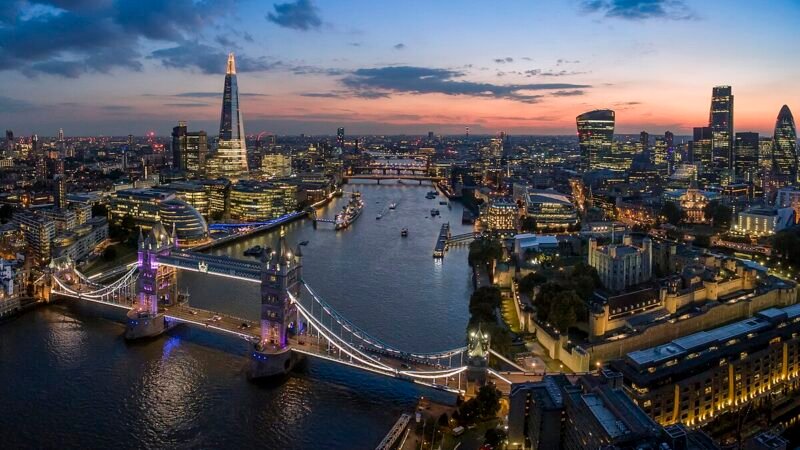
London, the capital of the United Kingdom, is located in south-east England and serves as the country's political, cultural and financial centre. On this date in 1988, the weather was cloudy. The zodiac sign is Taurus, which governs those born between 20 April and 20 May. The moon was in its waxing crescent phase, a period when the lunar disc gradually becomes more illuminated following the new moon.
On this day
On 5 May 1980, the British Special Air Service recaptured the Iranian embassy in London following a dramatic six-day siege. Iranian Arab separatists had seized the building, but the SAS assault saw the hostages successfully freed in an operation that became a defining moment in British counter-terrorism efforts and was watched live on television by millions worldwide.
Exactly one year earlier, on 5 May 1979, Irish republican Bobby Sands died in HM Prison Maze after a 66-day hunger strike. Sands, who had been elected Member of Parliament while imprisoned, became a symbol of Irish republican resistance during the conflict in Northern Ireland. His death sparked widespread mourning and had profound political ramifications on both sides of the Irish border.
World Hand Hygiene Day
World Hand Hygiene Day is observed on 5 May each year to promote awareness about the importance of hand hygiene in healthcare settings and beyond. The date was chosen by the World Health Organization to commemorate the birth of Ignaz Semmelweis, the Hungarian physician who discovered that handwashing could significantly reduce mortality rates in hospitals during the 19th century. The day has been recognised internationally since 2009 and serves to highlight how proper hand hygiene remains one of the most effective measures in preventing the spread of infectious diseases.
Children's Day (Japan/Korea)
Children's Day is celebrated on 5 May in Japan and Korea as a public holiday dedicated to honouring children and promoting child welfare. In Japan, the day is known as Kodomo no Hi and features the display of colourful koinobori (carp-shaped windsocks) and special foods such as kashiwa mochi. The observance has roots in traditional festivals dating back centuries, though it became an official national holiday in Japan in 1948 and in South Korea in 1975.
DayAtlas displays historical events, weather conditions and notable births and deaths for any date and location, providing users with comprehensive information about specific days throughout history and across the globe.
Find out what's happening today in London.
What the Weather Had in Store for London on 27th November 2026
True mastery begins when ambition leaves the stage.
Fortune of the Day
5th May in the Stars – Star Sign Taurus
Personality Profile
Personality People born on May 5th blend Taurus stability with numerological leadership in intriguing ways. Outwardly calm and grounded, they carry a pioneering spirit that sets them apart from typical Taureans. These individuals pursue harmony while possessing courage to forge new directions.
Strengths & Weaknesses Their greatest strengths are reliability, patience, and strong practical sense. However, their stubbornness can become limiting, and they risk becoming entrenched in fixed patterns. The challenge lies in balancing flexibility with their natural desire for consistency and security.
Love In romantic matters, these natives display remarkable loyalty and sensuality guided by Venus. They seek deep emotional connection and physical intimacy but move cautiously into new relationships. Partners receive steadfast devotion and enduring affection.
Caree & Finance Professionally, those born this day thrive in positions combining responsibility with creative control. They possess natural aptitude for finance, craftsmanship, and artistic pursuits. Their entrepreneurial spirit, tempered by caution, often leads to sustainable material success.
Health These individuals benefit from consistent physical activity and enjoy sensual self-care practices like massage or yoga. Their balanced approach to health is advantageous, though they must guard against overindulgence. A life balancing pleasure and moderation ensures lasting vitality.
That night, the moon was in its waxing crescent phase.
Chinese year of the Dragon (Earth).
Fun Facts About 5th May
Name Days in Your Language: Jodi, Jodie, Jody, Judie, Judith, Judy, Terrell, Tyrell, Tyrese, Tyron, Tyrone, Tyrrell, Tyson
Someone born on this day in 1988 would be 38 years old today — just 14,085 days into life, which is roughly 338,061 hours, 20,283,685 minutes, or 1,217,021,100 seconds spent on Earth so far.
It's the 126. day of the year. In 1988, 5th May falls on a Thursday.
As this is a leap year, there are 240 days still to come.
We’re currently in Week 18 — the year marches on.
Famous Birthdays on 5th May
On this day, 9 notable people were born on 5th May — spanning from 1985 to 1991. From world leaders to artists and scientists, discover who shares this birthday.
05/05/1991
Raúl Jiménez, Mexican footballer
Raúl Alonso Jiménez Rodríguez is a Mexican professional footballer who plays as a striker for EFL Championship club Wolverhampton Wanderers and the Mexico national team.
05/05/1990
Tatiana Schlossberg, American journalist and author (died 2025)
Tatiana Celia Kennedy Schlossberg was an American environmental journalist and author. She worked as a science and climate reporter for The New York Times and wrote for several other publications, including The Atlantic, The Washington Post, Vanity Fair, and Bloomberg News. Her book Inconspicuous Consumption: The Environmental Impact You Don't Know You Have was published by Grand Central Publishing in 2019.
Darcy Kuemper, Canadian ice hockey player
Darcy Kuemper is a Canadian professional ice hockey player who is a goaltender for the Los Angeles Kings of the National Hockey League (NHL). He was selected by the Minnesota Wild in the sixth round, 161st overall, of the 2009 NHL entry draft, and has also played in the NHL with the Arizona Coyotes, Colorado Avalanche, and Washington Capitals. Kuemper won the Stanley Cup with the Avalanche in 2022.
05/05/1989
Agnes Knochenhauer, Swedish curler
Agnes Ellinor Knochenhauer is a Swedish curler from Stockholm. She currently plays second on Team Anna Hasselborg. With Hasselborg, Knochenhauer has won three Olympic medals, gold at the 2018 Winter Olympics in Pyeongchang, 2026 Winter Olympics in Milan and Cortina d'Ampezzo and bronze at the 2022 Winter Olympics in Beijing. She also won a silver medal at the 2014 Games in Sochi as alternate for the Margaretha Sigfridsson rink.
05/05/1988
Adele, English singer-songwriter
Adele Laurie Blue Adkins is an English singer and songwriter. Regarded as a British cultural icon, she is known for her mezzo-soprano vocals and sentimental songwriting. Her accolades include 16 Grammy Awards, 12 Brit Awards, an Academy Award, a Primetime Emmy Award, and a Golden Globe Award.
Mervyn Westfield, English cricketer
Mervyn Simon Westfield is an English cricketer. He is a right-handed batsman and a right-arm medium-fast bowler who until September 2010 played for Essex. In January 2012, he became the first English cricketer to be convicted of spot-fixing, after admitting accepting £6,000 in exchange for bowling an over that was supposed to concede 12 runs.
05/05/1987
Graham Dorrans, Scottish footballer
Graham Dorrans is a Scottish professional footballer who plays as a midfielder for Johnstone Burgh.
05/05/1985
Emanuele Giaccherini, Italian footballer
Emanuele Giaccherini is an Italian former professional footballer who played as an attacking midfielder.
P. J. Tucker, American basketball player
Anthony Leon "P.J." Tucker Jr. is an American former professional basketball player. Regarded as a reliable corner three-point shooter and perimeter defender all throughout his career, Tucker won an NBA championship with the Milwaukee Bucks in 2021. He played college basketball for the Texas Longhorns. Outside his NBA career, he was also the 2008 Israeli Basketball Premier League MVP, and Israeli Basketball Premier League Finals MVP and also won championships in the Israeli Super League in 2008 with Hapoel Holon, the German League and the German Cup in 2012 with Brose Bamberg.
Lives Remembered on 5th May
On 5th May, 5 remarkable people passed away — from 1981 to 1988. Remember the lives and legacies of those we lost on this day.
05/05/1988
Michael Shaara, American author and academic (born 1928)
Michael Shaara was an American author of science fiction, sports fiction, and historical fiction.
05/05/1985
Donald Bailey, English engineer, designed the Bailey bridge (born 1901)
Sir Donald Coleman Bailey, OBE was an English civil engineer who invented the Bailey bridge. Field Marshal Montgomery is recorded as saying that "without the Bailey bridge, we should not have won the war."
05/05/1983
Horst Schumann, German physician (born 1901)
Horst Schumann was an SS-Sturmbannführer (major) and medical doctor who conducted sterilization and castration experiments at Auschwitz and was particularly interested in the mass sterilization of Jews by means of X-rays. Hors d'atteinte, a book by Frédéric Couderc, published in France by Les Escales and Pocket, reveals the extent of Schumann's crimes and his life as a fugitive in Africa.
John Williams, English-American actor (born 1903)
Hugh Ernest Leo Williams, known professionally as John Williams, was an English stage, film and television actor. He is remembered for his role as Chief Inspector Hubbard in Alfred Hitchcock's Dial M for Murder, as the chauffeur in Billy Wilder's Sabrina, as Mr. Brogan-Moore in Witness for the Prosecution (1957) and as the second "Mr. French" on TV's Family Affair in its first season (1967).
05/05/1981
Bobby Sands, PIRA volunteer, died on hunger strike (born 1954)
Robert Gerard Sands was a member of the Provisional Irish Republican Army (IRA) who died on hunger strike while imprisoned at HM Prison Maze in Northern Ireland. Sands helped to plan the 1976 Balmoral Furniture Company bombing in Dunmurry, which was followed by a gun battle with the Royal Ulster Constabulary. Sands was arrested while trying to escape and sentenced to 14 years for firearms possession.
Celebrations & Special Days Worldwide on 5th May
Children's Day (Japan, South Korea)
Children's Day is a commemorative date celebrated annually in honour of children, whose date of observance varies by country. In 1925, International Children's Day was first proclaimed in Geneva during the World Conference on Child Welfare. Since 1950, it is celebrated on 1 June in many countries that were part of the Eastern Bloc and Non-Aligned Movement, which follow the suggestion from Women's International Democratic Federation. World Children's Day is celebrated on 20 November to commemorate the issuance of the Declaration of the Rights of the Child by the UN General Assembly on 20 November 1959, along with the adoption of the Convention on the Rights of the Child on that date in 1989. In some countries, it is Children's Week and not Children's Day.
Christian feast day: Angelus of Jerusalem
Angelus of Jerusalem, OCarm was a Catholic convert from Judaism and a religious priest of the Carmelites of the Ancient Observance.
Christian feast day: Aventinus of Tours
Aventinus was a hermit and friend of Thomas Becket. Living the life of a hermit in Tours, France, before being ordained a deacon by Thomas Becket, and subsequently accompanied him to the Synod of Tours in 1163.
Christian feast day: Blessed Caterina Cittadini
Beatification is an act by which the Catholic Church formally recognizes that a deceased member of the faithful is believed to have entered Heaven and is capable of interceding on behalf of individuals who pray in their name, permitting a restricted, local form of public veneration.
Christian feast day: Blessed Edmund Ignatius Rice
Edmund Ignatius Rice, F.P.M., C.F.C. was a Catholic missionary and educationalist who founded two institutes of religious brothers: the Congregation of Christian Brothers and the Presentation Brothers.
Christian feast day: Frederick the Wise (Lutheran Church–Missouri Synod)
Frederick III, also known as Frederick the Wise, was Prince-elector of Saxony from 1486 to 1525, who is mostly remembered for the protection given to his subject Martin Luther, the seminal figure of the Protestant Reformation. He was the son of Ernest, Elector of Saxony, and Elisabeth, daughter of Albert III, Duke of Bavaria.
Christian feast day: Gotthard of Hildesheim
Gotthard, also known as Gothard or Godehard the Bishop, was a German bishop venerated as a saint.
Christian feast day: Blessed Grzegorz Bolesław Frąckowiak
Beatification is an act by which the Catholic Church formally recognizes that a deceased member of the faithful is believed to have entered Heaven and is capable of interceding on behalf of individuals who pray in their name, permitting a restricted, local form of public veneration.
Christian feast day: Hilary of Arles
Hilary of Arles, also known by his Latin name Hilarius, was a bishop of Arles in Southern France. He is venerated as a saint in the Eastern Orthodox Church and Roman Catholic Church, with 5 May being his feast day.
Christian feast day: Jutta of Kulmsee
Jutta of Kulmsee, was a German member of the Third Order of Saint Francis.
Christian feast day: Stanisław Kazimierczyk
Stanisław Kazimierczyk was a Polish Catholic priest and a professed member of the Canons Regular of the Lateran. He became noted for his ardent devotions to both the Eucharist and to his personal patron saint, Stanislaus of Szczepanów, as well as for his charitable dedication to the ill and poor of Kraków.
Christian feast day: May 5 (Eastern Orthodox liturgics)
May 5 in Eastern Orthodox liturgical calendars is a feast day and a day of commemoration of saints and martyrs. Although some Orthodox churches use the Revised Julian Calendar and others use the traditional Julian calendar, the fixed commemorations for their respective May 5 are broadly the same, no matter which calendar is used.
Cinco de Mayo (Mexico, United States)
Cinco de Mayo is an annual celebration held on May 5 to celebrate Mexico's victory over the Second French Empire at the Battle of Puebla in 1862, led by General Ignacio Zaragoza. Zaragoza died months after the battle from an illness, however, and a larger French force ultimately defeated the Mexican army at the Second Battle of Puebla and then occupied Mexico City. Following the end of the American Civil War in 1865, the United States began lending money and guns to the Mexican Liberals, pushing France and Mexican Conservatives to the edge of defeat. At the opening of the French chambers in January 1866, Napoleon III announced that he would withdraw French troops from Mexico. In reply to a French request for American neutrality, the American secretary of state William H. Seward replied that French withdrawal from Mexico should be unconditional.
Constitution Day (Kyrgyzstan)
Constitution Day is a holiday to honour the constitution of a country. Constitution Day is often celebrated on the anniversary of the signing, promulgation or adoption of the constitution, or in some cases, to commemorate the change to constitutional monarchy.
Europe Day (Council of Europe)
Europe Day is a day celebrating "peace and unity in Europe" celebrated on 5 May by the Council of Europe and on 9 May by the European Union.
Feast of al-Khadr or Saint George (Palestinian)
Saint George's Day is the feast day of Saint George, celebrated by Christian churches, countries, regions, and cities from which he is the main patron saint, including England, Ethiopia, Georgia, Catalonia, Aragon, Palestine, Rio de Janeiro, Alcoi, and Genoa, and also where he is an important patron saint, including Albania, Bosnia and Herzegovina, Bulgaria, Greece, Lithuania, Portugal, Romania, Serbia, Syria, and Lebanon.
Indian Arrival Day (Guyana)
Indian Arrival Day is a public holiday that was first started in Trinidad and Tobago to celebrate the East Indian immigrants arrival to the nation during the indentureship period.
International Midwives' Day (International)
The International Day of the Midwife is annually celebrated on 5 May, and was established in 1992 by the International Confederation of Midwives (ICM) to celebrate and raise awareness about the midwifery profession.
Liberation Day (Denmark, Netherlands)
Liberation Day is a day, often a public holiday, that marks the liberation of a place, similar to an independence day, but differing from it because it does not involve the original creation of statehood. It commemorates the end of an occupation or the fall of a regime or the liberation from both a foreign occupation and a collaborationist regime.
Lusophone Culture Day (Community of Portuguese Language Countries)
The Community of Portuguese Language Countries, also known as the Lusophone Commonwealth or Lusophone Community, is an international organization and political association of Lusophone nations across four continents, where Portuguese is an official language. The CPLP operates as a privileged, multilateral forum for the mutual cooperation of the governments, economies, non-governmental organizations, and peoples of the Lusofonia. The CPLP consists of 9 member states and 34 associate observers, located in Africa, América, Asia, Europe and Oceania, totalling 39 countries and 4 organizations.
World Portuguese Language Day (International)
World Portuguese Language Day is observed annually on May 5. The day is marked through a range of musical performances, literature readings, competitions, cultural shows, art exhibitions, lectures, plays, and other cultural events worldwide in order to highlight the use and spread of the Portuguese language around the world.
Martyrs' Day (Albania)
Martyrs' Day is an Albanian Holiday observed annually on May 5 for the remembrance of those who died for Albanian liberation during World War 2. The date was chosen for its significance as the anniversary of the assassination of Qemal Stafa by Italian fascists in 1942. His death became a symbol of anti-fascism and Albanian liberation.
Missing and Murdered Indigenous Women Awareness Day (Canada and United States)
Missing and Murdered Indigenous Women and Girls are victims of violence against Indigenous women in Canada and the United States, of those in the First Nations in Canada and Native American communities, but also amongst other Indigenous peoples, such as in Australia and New Zealand. A grassroots movement raises awareness of MMIWG through marches, protests, holding meetings, domestic violence training, building and maintaining records of the missing, and other informational sessions for law enforcement agencies.
National Cartoonist Day
May 5th is National Cartoonist Day, a world-wide celebration of cartoonists and their work. The National Cartoonist Society declared the date in the 1990s to promote support for the cartooning industry, and to recognize the impact they have had on society. The establishment of the Day was spearheaded by co-chairpersons Polly Keener and Ken Alvine of the National Cartoonists Day Committee.
Patriots' Victory Day (Ethiopia)
The Ethiopian Patriots' Victory Day, also called Meyazia 27, is a national holiday in Ethiopia celebrated on 5 May to commemorate the Ethiopian Arbegnoch resistance against Italy during the Second Italo-Ethiopian War (1935–1937). It also marks Haile Selassie's return to the throne and Italy's defeat following World War II.
Revenge of the Fifth (see Star Wars Day)
Star Wars Day is an informal commemorative day observed annually on May 4 to celebrate the Star Wars media franchise created by filmmaker George Lucas. Observance of the day has spread quickly through media and grassroots celebrations since the franchise began in 1977.
Senior Citizens Day (Palau)
This is a list of holidays in Palau.
Soviet Press Day (Soviet Union)
The Soviet Press Day was an annual observance in the Soviet Union, celebrated on May 5. The celebration was done in commemoration of the publishing of the first issue of the Bolshevik newspaper Pravda on 5 May [O.S. 22 April] 1912. Soviet Press Day was instituted in 1922 in connection with the tenth anniversary of the founding of Pravda, on decision by the Central Committee of the Russian Communist Party (Bolsheviks) and by approval of the 11th Party Congress.
Tango no sekku (Japan)
Tango no Sekku (端午の節句), also known as Ayame no hi , originally referred to an annual ceremony held at the Japanese imperial court on May 6. It was one of the five annual court ceremonies called Gosekku. Since the Kamakura period (1185–1333), when the samurai class seized power, Tango no Sekku has become an event to ward off evil spirits for samurai boys. Japanese armour, kabuto (helmets) and Japanese swords were displayed in houses from the Kamakura period to the Muromachi period (1333–1573). From the Edo period (1603–1867), samurai dolls were displayed in homes, koinobori were hung in gardens. From this period, the custom of decorating houses with offerings on Tango no Sekku spread to the peasant and chōnin classes, and paper kabuto began to be displayed. Since the Showa era (1926–1989), miniatures of samurai armor have become more popular than samurai dolls.
Uyghur Doppa Cultural Festival (Doppa Day): 1–2
The Uyghur Doppa Cultural Festival, observed annually on 5 May, celebrates the culture and history of the Uyghurs, a Turkic people originating from Xinjiang, China. It is also known as Uyghur Doppa Day or just Doppa Day. The doppa is a traditional skullcap commonly worn by Uyghurs.
What Happened on 5th May?
51 significant events took place on Thursday, 5th May — stretching from 553 to 2023. Explore the moments that shaped history on this day.
05/05/2023
The World Health Organization declares the end of the COVID-19 pandemic as a global health emergency.
The World Health Organization (WHO) is a specialized agency of the United Nations (UN) which coordinates responses to international public health issues and emergencies. It is headquartered in Geneva, Switzerland, and has six regional offices and 150 field offices worldwide. Only sovereign states are eligible to join, and it is the largest intergovernmental health organization at the international level.
05/05/2010
Mass protests in Greece erupt in response to austerity measures imposed by the government as a result of the Greek government-debt crisis.
The anti-austerity movement in Greece involved a series of demonstrations and general strikes that took place across the country. The events, which began on 5 May 2010, were provoked by plans to cut public spending and raise taxes as austerity measures in exchange for a €110 billion bail-out, aimed at solving the Greek government-debt crisis. Three people were killed on 5 May in one of the largest demonstrations in Greece since 1973.
05/05/2007
Kenya Airways Flight 507 crashes after takeoff from Douala International Airport in Douala, Cameroon, killing all 114 aboard, making it the deadliest aircraft disaster in Cameroon.
Kenya Airways Flight 507 was a scheduled international passenger service between Abidjan, Ivory Coast, and Nairobi, Kenya, with a stopover in Douala, Cameroon, operated by Kenya Airways. On 5 May 2007, the Boeing 737-800 aircraft serving the flight crashed immediately after takeoff from Douala International Airport in Cameroon, killing all 114 occupants onboard.
05/05/2006
The government of Sudan signs an accord with the Sudan Liberation Army.
Sudan, officially the Republic of the Sudan, is a country in Northeast Africa. It borders the Central African Republic to the southwest, Chad to the west, Libya to the northwest, Egypt to the north, the Red Sea to the east, Eritrea and Ethiopia to the southeast, and South Sudan to the south. Sudan has a population of 51.8 million people as of 2025 and occupies 1,886,068 square kilometres, making it Africa's third-largest country by area. Sudan's capital and most populous city is Khartoum.
05/05/1994
The signing of the Bishkek Protocol between Armenia and Azerbaijan effectively freezes the Nagorno-Karabakh conflict.
The Bishkek Protocol was a provisional ceasefire agreement, signed by the representatives of Armenia, Azerbaijan, the breakaway Republic of Artsakh, and Russia on May 12, 1994, in Bishkek, the capital of Kyrgyzstan.
American teenager Michael P. Fay is caned in Singapore for theft and vandalism.
In 1994, the District Court in Singapore sentenced an American teenager, Michael Peter Fay, to be lashed six times with a cane for violating the Vandalism Act. This caused a temporary strain in relations between Singapore and the United States.
05/05/1991
A riot breaks out in the Mt. Pleasant section of Washington, D.C. after police shoot a Salvadoran man.
The 1991 Washington, D.C., riot, sometimes referred to as the Mount Pleasant riot or Mount Pleasant Disturbance, occurred in May 1991, when rioting broke out in the Mount Pleasant neighborhood of Washington, D.C., in response to an African-American female police officer having shot a Salvadoran man in the chest following a Cinco de Mayo celebration.
05/05/1987
Iran–Contra affair: Start of Congressional televised hearings in the United States.
The Iran–Contra affair or Iran–Contra scandal, also referred to as the Iran Initiative or Contragate, was a political scandal in the United States that centered on arms trafficking to Iran between 1981 and 1986, facilitated by senior officials of the Reagan administration. The administration hoped to use the proceeds of the arms sale to fund the Contras, an anti-Sandinista rebel group in Nicaragua. Under the Boland Amendments, a series of laws passed by Congress and signed by Ronald Reagan, further funding of the Contras by legislative appropriations was prohibited by Congress, but the Reagan administration continued funding them secretly using non-appropriated funds.
05/05/1985
Ronald Reagan visits the military cemetery at Bitburg and the site of the Bergen-Belsen concentration camp, where he makes a speech.
Ronald Wilson Reagan was an American politician and actor who served as the 40th president of the United States from 1981 to 1989. A member of the Republican Party, he became an important figure in the American conservative movement. The period encompassing his presidency is known as the Reagan era.
05/05/1981
Bobby Sands dies in the Long Kesh prison hospital (Northern Ireland) after 66 days of hunger-striking, aged 27.
Robert Gerard Sands was a member of the Provisional Irish Republican Army (IRA) who died on hunger strike while imprisoned at HM Prison Maze in Northern Ireland. Sands helped to plan the 1976 Balmoral Furniture Company bombing in Dunmurry, which was followed by a gun battle with the Royal Ulster Constabulary. Sands was arrested while trying to escape and sentenced to 14 years for firearms possession.
05/05/1980
Operation Nimrod: The British Special Air Service storms the Iranian embassy in London after a six-day siege.
The Iranian Embassy siege took place from 30 April to 5 May 1980, after a group of six armed men stormed the Iranian embassy on Prince's Gate in South Kensington, London.
05/05/1973
Secretariat wins the 1973 Kentucky Derby in 1:59.4, an as-yet-unbeaten record.
Secretariat, also known as Big Red, was a champion American thoroughbred racehorse who was the ninth winner of the American Triple Crown, setting and still holding the fastest time record in all three of its constituent races. He is widely considered to be the greatest racehorse of all time. He became the first Triple Crown winner in 25 years and his record-breaking victory in the Belmont Stakes, which he won by 31 lengths, is often considered the greatest race ever run by a thoroughbred racehorse. During his racing career, he won five Eclipse Awards, including Horse of the Year honors at ages two and three. He was nominated to the National Museum of Racing and Hall of Fame in 1974. In the Blood-Horse magazine List of the Top 100 U.S. Racehorses of the 20th Century, Secretariat was second to Man o' War.
05/05/1972
Alitalia Flight 112 crashes into Mount Longa near Palermo, Sicily, killing all 115 aboard, making it the deadliest single-aircraft disaster in Italy.
Alitalia Flight 112 was a scheduled flight from Leonardo da Vinci Airport, in Rome, Italy, to Palermo International Airport in Palermo, Italy, with 115 on board. On 5 May 1972, the Douglas DC-8 crashed into Mount Longa, about 3 miles (4.8 km) southwest of Palermo while on approach to the airport, killing all 115 passengers and crew onboard. Investigators believe that the crew had three miles visibility and did not adhere to the established vectors issued by air traffic control, while according to an independent investigation the accident was caused by an explosion on board.
05/05/1964
The Council of Europe declares May 5 as Europe Day.
The Council of Europe is an international organisation which aims to uphold human rights, democracy and the rule of law in Europe. Founded in 1949, it is Europe's oldest intergovernmental organisation with the largest number of Member States, representing 46 European member states. The council is an official United Nations observer. The headquarters of the Council of Europe, as well as the European Court of Human Rights – one of its main bodies – are situated in Strasbourg, France. Field offices are spread in over 16 countries, including in Africa, namely Morocco and Tunisia. The Council uses English and French as its two official languages. The Committee of Ministers, the PACE, and the Congress of the Council of Europe also use German and Italian for some of their work. The council's two statutory bodies are the Committee of Ministers, which comprises the foreign ministers of each member state, and the Parliamentary Assembly of the Council of Europe (PACE), which is composed of members of the national parliaments of each member state. The Commissioner for Human Rights is an institution within the Council of Europe, mandated to promote awareness of and respect for human rights within the member states. The secretary general presides over the secretariat of the organisation. Other major CoE bodies include the European Directorate for the Quality of Medicines & HealthCare (EDQM) and the European Audiovisual Observatory. The 1949 Statute of the Council of Europe established the organization, initially among Western European states. Portugal and Spain joined in 1976 and 1977 via the Portuguese and Spanish transitions to democracies. Following the revolutions of 1989 and dissolution of the Soviet Union, all post-Warsaw Pact and post-Yugoslav states countries joined, as well as all European post-Soviet states except Belarus and Kazakhstan. Russia became the first country expelled from the Council, following its 2022 invasion of Ukraine.
05/05/1961
Project Mercury: Alan Shepard becomes the first American to travel into outer space, on a sub-orbital flight.
Project Mercury was the first human spaceflight program of the United States, running from 1958 through 1963. An early highlight of the Space Race, its goal was to put a man into Earth orbit and return him safely, ideally before the Soviet Union. Taken over from the US Air Force by the newly created civilian space agency NASA, it conducted 20 uncrewed developmental flights, and six successful flights by astronauts. The program, which took its name from Roman mythology, cost $2.83 billion. The astronauts were collectively known as the "Mercury Seven", and each spacecraft was given a name ending with a "7" by its pilot.
05/05/1955
The General Treaty, by which France, Britain and the United States recognize the sovereignty of West Germany, comes into effect.
The Bonn–Paris conventions were signed in May 1952 and came into force after the 1955 ratification. The conventions put an end to the Allied occupation of West Germany.
05/05/1946
The International Military Tribunal for the Far East begins in Tokyo with twenty-eight Japanese military and government officials accused of war crimes and crimes against humanity.
The International Military Tribunal for the Far East (IMTFE), also known as the Tokyo Trial and the Tokyo War Crimes Tribunal, was a military trial convened on April 29, 1946, to try leaders of the Empire of Japan for their crimes against peace, conventional war crimes, and crimes against humanity, leading up to and during World War II. The IMTFE was modeled after the International Military Tribunal (IMT) at Nuremberg, Germany, which prosecuted the leaders of Nazi Germany for their war crimes, crimes against peace, and crimes against humanity.
05/05/1945
World War II: The Prague uprising begins as an attempt by the Czech resistance to free the city from German occupation.
The Prague uprising was a partially successful attempt by the Czech resistance movement to liberate the city of Prague from German occupation in May 1945, during the end of World War II. The preceding six years of occupation had fuelled anti-German sentiment and the rapid advance of Allied forces from the Red Army and the United States Army offered the resistance a chance of success.
World War II: A Fu-Go balloon bomb launched by the Japanese Army kills six people near Bly, Oregon.
Fu-Go was an incendiary balloon weapon deployed by Japan against the United States during World War II. It consisted of a hydrogen-filled paper balloon 33 feet (10 m) in diameter, with a payload of four 11-pound (5.0 kg) incendiary devices and one 33-pound (15 kg) high-explosive anti-personnel bomb. The uncontrolled balloons were carried over the Pacific Ocean from Japan to North America by fast, high-altitude air currents, today known as the jet stream, and used a sophisticated sandbag ballast system to maintain their altitude. The bombs were intended to ignite large-scale forest fires and spread panic.
World War II: Battle of Castle Itter, one of only two battles in that war in which American and German troops fought cooperatively.
The Battle of Castle Itter was fought on 5 May 1945, in the Austrian village of Itter in the North Tyrol region of the country, during the last days of the European Theater of World War II.
05/05/1941
Emperor Haile Selassie returns to Addis Ababa; the country commemorates the date as Liberation Day or Patriots' Victory Day.
Haile Selassie I was Emperor of Ethiopia from 1930 to 1974. He rose to power as the Regent Plenipotentiary of Ethiopia under Empress Zewditu between 1916 and 1930.
05/05/1940
World War II: Norwegian campaign: Norwegian squads in Hegra Fortress and Vinjesvingen capitulate to German forces after all other Norwegian forces in southern Norway had laid down their arms.
World War II, or the Second World War, was a global conflict between two coalitions: the Allies and the Axis powers. Nearly all of the world's countries were involved, with many engaging in total war on an unprecedented scale. World War II was the deadliest conflict in history, causing the deaths of 60 to 75 million people, a majority of whom were civilians. Millions died as a result of massacres, starvation, disease and genocides. After the Allied victory, Germany, Austria, Japan and Korea were occupied, and German and Japanese leaders were tried for war crimes.
05/05/1936
March of the Iron Will: Italian troops occupy Addis Ababa, Ethiopia.
The March of the Iron Will was an Italian offensive occurring from 26 April to 5 May 1936, during the final days of the Second Italo-Ethiopian War. Its goal was to capture the Ethiopian capital, Addis Ababa, in a show of force for Fascist propaganda. An Italian mechanized column under the command of Pietro Badoglio, Marshal of Italy, advanced from the town of Dessie to take Addis Ababa. The march covered a distance of approximately 200 miles (320 km).
05/05/1930
The 1930 Bago earthquake, the first of two major earthquakes in southern Burma, kills as many as 7,000 in Yangon and Bago.
An earthquake affected Myanmar on 5 May 1930 with a moment magnitude (Mw) of 7.4. The shock occurred 35 km (22 mi) beneath the surface with a maximum Rossi–Forel intensity of IX. The earthquake was the result of rupture along a 131 km (81 mi) segment of the Sagaing Fault—a major strike-slip fault that runs through the country. Extensive damage was reported in the southern part of the country, particularly in Bago and Yangon, where buildings collapsed and fires erupted. At least 550, and possibly up to 7,000 people were killed. A moderate tsunami struck the Burmese coast which caused minor damage to ships and a port. The earthquake was felt over 570,000 km2 (220,000 sq mi) and as far as Shan State and Thailand; it was followed by many aftershocks including several damaging ones. A further, related, earthquake in December was similarly sized and also occurred along the Sagaing Fault.
05/05/1920
US authorities arrest Nicola Sacco and Bartolomeo Vanzetti for alleged robbery and murder.
Nicola Sacco and Bartolomeo Vanzetti were Italian immigrants and anarchists, controversially accused of murdering Alessandro Berardelli and Frederick Parmenter, a guard and a paymaster, during the April 15, 1920, armed robbery of the Slater and Morrill Shoe Company in Braintree, Massachusetts, United States. Seven years later, they were executed in the electric chair at Charlestown State Prison, on the same day as Celestino Medeiros, who had confessed to the crime. Most historians consider their conviction unfair because it was affected by prejudice against immigrants and radicals.
05/05/1912
The first issue of the Bolshevik newspaper Pravda is published.
The Bolsheviks, led by Vladimir Lenin, were a radical faction of the Marxist Russian Social Democratic Labour Party (RSDLP) which split with the Mensheviks at the Second Party Congress in 1903. The Bolshevik party, formally established in 1912, seized power in Russia in the October Revolution of 1917 and was later renamed the Russian Communist Party, All-Union Communist Party, and ultimately the Communist Party of the Soviet Union. Its ideology, based on Leninist and later Marxist–Leninist principles, became known as Bolshevism.
05/05/1905
The trial in the Stratton Brothers case begins in London, England; it marks the first time that fingerprint evidence is used to gain a conviction for murder.
Alfred Edward Stratton (1882-1905) and his brother Albert Ernest Stratton (1884-1905) were the first men to be convicted in Britain for murder based on fingerprint evidence. They were both executed at 9 am on 23 May 1905 at HM Prison Wandsworth. The case, otherwise known as the Mask Murders, the Deptford Murders or the Farrow Murders, was one of the earliest convictions made using forensic science.
05/05/1904
Pitching against the Philadelphia Athletics at the Huntington Avenue Grounds, Cy Young of the Boston Americans throws the first perfect game in the modern era of baseball.
In baseball, the pitcher is the player who throws ("pitches") the baseball from the pitcher's mound toward the catcher to begin each play, with the goal of retiring a batter, who attempts to either make contact with the pitched ball or draw a walk. The pitcher is only one out of the many other baseball positions. In the defensive numbering system used in baseball, the pitcher is assigned the number 1. The pitcher is often considered the most important player on the defensive side of the game, and as such is situated at the right end of the defensive spectrum. There are many different types of pitchers, such as the starting pitcher, relief pitcher, middle reliever, lefty specialist, setup man, and the closer.
05/05/1891
The Music Hall in New York City (later known as Carnegie Hall) has its grand opening and first public performance, with Tchaikovsky as the guest conductor.
Carnegie Hall is a concert venue at 881 Seventh Avenue, between 56th and 57th Streets, in Midtown Manhattan, New York City. Designed by architect William Burnet Tuthill and built by its namesake, industrialist and philanthropist Andrew Carnegie, the venue is one of the most prestigious in the world for both classical music and popular music. Carnegie Hall has its own artistic programming, development, and marketing departments and presents about 250 performances each season. It is also rented out to performing groups, though it has not had a resident company since the New York Philharmonic moved to Lincoln Center in 1962.
05/05/1887
The Peruvian Academy of Language is founded.
The Peruvian Academy of Language or …of the Language is a cultural institution that brings together literary figures, writers, poets, linguists, and scholars specializing in the use of the Spanish language in Peru. It is a collective member of the Association of Spanish Language Academies.
05/05/1886
Workers marching for the eight-hour day in Milwaukee, Wisconsin, are shot at by Wisconsin National Guardsmen in what becomes known as the Bay View Massacre.
The eight-hour day movement was a social movement that appeared in various countries to regulate the length of a working day. The goal was preventing excesses and abuses of working time.
05/05/1877
American Indian Wars: Sitting Bull leads his band of Lakota into Canada to avoid harassment by the United States Army under Colonel Nelson Miles.
The American Indian Wars, also known as the American Frontier Wars, and the Indian Wars, were initially fought by European colonial empires, the United States, Confederate States and Republic of Texas against various American Indian tribes in North America. These conflicts occurred from the time of the earliest European colonial settlements in the 17th century until the end of the 19th century. The various conflicts resulted from a wide variety of factors, the most common being the desire of settlers and governments for tribal lands. The European powers and their colonies enlisted allied American Indian tribes to help them conduct warfare against each other's colonial settlements. After the American Revolution, many conflicts were local to specific states or regions and frequently involved disputes over land use; many involved retaliatory violence.
05/05/1866
Memorial Day first celebrated in United States at Waterloo, New York.
Memorial Day is a federal holiday in the United States for mourning the U.S. military personnel who died while serving in the U.S. Armed Forces. It is observed on the last Monday of May.
05/05/1865
American Civil War: The Confederate government is declared dissolved at Washington, Georgia.
The conclusion of the American Civil War commenced with the articles of surrender agreement of the Army of Northern Virginia on April 9, 1865, at the Virginian village of Appomattox Court House, by General Robert E. Lee and concluded with the surrender of CSS Shenandoah on November 6, 1865, bringing the hostilities of the American Civil War to a close. Legally, the war did not end until a proclamation by President Andrew Johnson on August 20, 1866, when he declared "that the said insurrection is at an end and that peace, order, tranquillity, and civil authority now exist in and throughout the whole of the United States of America". The Confederate government being in the final stages of collapse, the war ended by debellatio, with no definitive capitulation from the rapidly disintegrating Confederacy; rather, Lee's surrender marked the effective end of Confederate military operations. The Confederate cabinet held its final meeting on May 5, at which point it declared the Confederacy dissolved, ending its substantive existence; despite this, some remnant Confederate units did not surrender for another month.
05/05/1864
American Civil War: The Battle of the Wilderness begins in Spotsylvania County.
The American Civil War was fought in the United States between the Union and the Confederacy, which was formed in 1861 by Southern states that had seceded from the Union to preserve the institution of slavery. The South saw slavery as threatened because of the election of Abraham Lincoln as president in 1860, the abolitionist movement, and the growing electoral power of the North. The war ended with a Union victory, dissolution of the Confederacy and the national abolition of slavery, freeing four million African Americans.
05/05/1862
Cinco de Mayo: Troops led by Ignacio Zaragoza halt a French invasion in the Battle of Puebla in Mexico.
Cinco de Mayo is an annual celebration held on May 5 to celebrate Mexico's victory over the Second French Empire at the Battle of Puebla in 1862, led by General Ignacio Zaragoza. Zaragoza died months after the battle from an illness, however, and a larger French force ultimately defeated the Mexican army at the Second Battle of Puebla and then occupied Mexico City. Following the end of the American Civil War in 1865, the United States began lending money and guns to the Mexican Liberals, pushing France and Mexican Conservatives to the edge of defeat. At the opening of the French chambers in January 1866, Napoleon III announced that he would withdraw French troops from Mexico. In reply to a French request for American neutrality, the American secretary of state William H. Seward replied that French withdrawal from Mexico should be unconditional.
05/05/1835
The first railway in continental Europe opens between Brussels and Mechelen.
Belgium was heavily involved in the early development of railway transport. Belgium was the second country in Europe, after Great Britain, to open a railway and produce locomotives. The first line, between the cities of Brussels and Mechelen opened in 1835. Belgium was the first state in Europe to create a national railway network and the first to possess a nationalised railway system. The network expanded fast as Belgium industrialised, and by the early 20th century was increasingly under state-control. The nationalised railways, under the umbrella organisation National Railway Company of Belgium (NMBS/SNCB), retained their monopoly until liberalisation in the 2000s.
05/05/1821
Emperor Napoleon dies in exile on the island of Saint Helena in the South Atlantic Ocean.
Napoleon Bonaparte was Emperor of the French from 18 May 1804 until his first abdication in 1814, with a brief restoration during the Hundred Days in 1815. He rose to prominence as a general during the French Revolution and led a series of military campaigns across Europe and the Middle East during the French Revolutionary and Napoleonic Wars. As a statesman, he implemented numerous legal and administrative reforms in France and Europe.
The first edition of The Manchester Guardian, now The Guardian, is published.
The Guardian is a British daily newspaper. It was founded in Manchester in 1821 as The Manchester Guardian and changed its name in 1959, followed by a move to London. Along with its sister paper, The Guardian Weekly, The Guardian is part of the Guardian Media Group, owned by the Scott Trust Limited. The trust was created in 1936 to "secure the financial and editorial independence of The Guardian in perpetuity and to safeguard the journalistic freedom and liberal values of The Guardian free from commercial or political interference". The trust was converted into a limited company in 2008, with a constitution written so as to maintain for The Guardian the same protections as were built into the structure of the Scott Trust by its creators. Profits are reinvested in its journalism rather than distributed to owners or shareholders. It is considered a newspaper of record in the UK.
05/05/1809
Mary Kies becomes the first woman awarded a U.S. patent, for a technique of weaving straw with silk and thread.
Mary Dixon Kies was an American inventor. On May 5, 1809, her patent for a new technique of weaving straw with silk and thread to make hats was signed by President James Madison.
05/05/1789
In France, the Estates-General convenes for the first time since 1614.
France, officially the French Republic, is a country primarily located in Western Europe. Its overseas regions and territories include French Guiana in South America, Saint Pierre and Miquelon in the North Atlantic, the French West Indies, and many islands in Oceania and the Indian Ocean. Metropolitan France shares borders with Belgium and Luxembourg to the north; Germany to the northeast; Switzerland to the east; Italy and Monaco to the southeast; Andorra and Spain to the south; and a maritime border with the United Kingdom to the northwest. Its metropolitan area extends from the Rhine to the Atlantic Ocean and from the Mediterranean Sea to the English Channel and the North Sea. Its 18 integral regions—five of which are overseas—span a combined area of 632,702 km2 (244,288 sq mi), with a total population estimated at over 69.1 million in 2026. Its capital, largest city and main cultural and economic centre is Paris, with a metropolitan population of over 13 million.
05/05/1762
Russia and Prussia sign the Treaty of St. Petersburg.
Russia, or the Russian Federation, is a country in Eastern Europe and North Asia. It is the largest country in the world, spanning eleven time zones and sharing land borders with fourteen countries. With a population of over 140 million, Russia is the most populous country in Europe and the ninth-most populous in the world. It is a highly urbanised country, with three-fourths of its population living in urban areas. Moscow, the most populous metropolitan area in Europe, is the capital and largest city of Russia, while Saint Petersburg is its second-largest city and a major cultural centre.
05/05/1654
Cromwell's Act of Grace, aimed at reconciliation with the Scots, proclaimed in Edinburgh.
Cromwell's Act of Grace, or, more formally, the Act of Pardon and Grace to the People of Scotland, was an Act of the Parliament of England that declared that the people of Scotland were pardoned for any crimes they might have committed during the Wars of the Three Kingdoms. It was proclaimed at the Mercat Cross in Edinburgh on 5 May 1654. General George Monck, the English military governor of Scotland, was present in Edinburgh, having arrived the day before for two proclamations also delivered at the Mercat Cross, the first of which declared Oliver Cromwell to be the protector of England, Ireland and Scotland, and that Scotland was united with the Commonwealth of England.
05/05/1640
King Charles I of England dissolves the Short Parliament.
Charles I was King of England, Scotland, and Ireland from 27 March 1625 until his execution in 1649.
05/05/1609
Daimyō (Lord) Shimazu Tadatsune of the Satsuma Domain in southern Kyūshū, Japan, completes his successful invasion of the Ryūkyū Kingdom in Okinawa.
Shimazu Tadatsune was a tozama daimyō of Satsuma, the first to hold it as a formal fief (han) under the Tokugawa shogunate, and the first Japanese to rule over the Ryūkyū Kingdom. As lord of Satsuma, he was among the most powerful lords in Japan at the time, and formally submitted to Tokugawa Ieyasu in 1602, to prove his loyalty, being rewarded as a result with the name Matsudaira Iehisa; Matsudaira being a branch family of the Tokugawa, and "Ie" of "Iehisa" being taken from "Ieyasu", this was a great honor. As of 1603, his holdings amounted to 605,000 koku.
05/05/1494
On his second voyage to the New World, Christopher Columbus sights Jamaica, landing at Discovery Bay and declares Jamaica the property of the Spanish crown.
Christopher Columbus was an Italian explorer and navigator from the Republic of Genoa who completed four transatlantic voyages in the name of the Spanish Catholic Monarchs, opening the way for the widespread European exploration and colonization of the Americas. His expeditions were the first known European contact with the Caribbean and Central and South America.
05/05/1292
Election of Count Adolf of Nassau as King of the Romans in the Dominican monastery of Frankfurt.
Adolf was the count of Nassau from about 1276 and the elected king of Germany from 1292 until his deposition by the prince-electors in 1298. He was never crowned by the pope, which would have secured him the imperial title. He was the first physically and mentally healthy ruler of the Holy Roman Empire ever to be deposed without a papal excommunication. Adolf died shortly afterwards in the Battle of Göllheim fighting against his successor Albert of Habsburg.
05/05/1260
Kublai Khan becomes ruler of the Mongol Empire.
Kublai Khan, also known by his temple name as the Emperor Shizu of Yuan and his regnal name Setsen Khan, was the founder and first emperor of the Mongol-led Yuan dynasty of China. He proclaimed the dynastic name "Great Yuan" in 1271, and ruled Yuan China until his death in 1294.
05/05/1215
Rebel barons renounce their allegiance to King John of England — part of a chain of events leading to the signing of the Magna Carta.
John was King of England from 1199 until his death in 1216. He lost the Duchy of Normandy and most of his other French lands to King Philip II of France, resulting in the collapse of the Angevin Empire and contributing to the subsequent growth in power of the French Capetian dynasty during the 13th century. The baronial revolt at the end of John's reign led to the sealing of Magna Carta, a document considered a foundational milestone in English and later British constitutional history.
05/05/1192
Queen Isabella I of Jerusalem marries Henry II, Count of Champagne.
Isabella I was the queen of Jerusalem who reigned from the early 1190s to her death. She received the homage of her vassals as the rightful heir to the throne after the death of her half-sister Queen Sibylla in 1190, but Sibylla's widower, Guy of Lusignan, held onto the kingdom until 1192. Isabella became queen upon her coronation in 1198. Having little political ambition, she passed the government on to three successive husbands, Conrad of Montferrat, Henry II of Champagne, and Aimery of Lusignan, all of whom included her in the issuing of their charters. Isabella's co-reign with Aimery saw the compilation of the Livre au roi, a law treatise establishing the rights and obligations of queens regnant of Jerusalem.
05/05/0553
The Second Council of Constantinople begins.
The Second Council of Constantinople is the fifth of the first seven ecumenical councils recognized by both the Eastern Orthodox Church and the Catholic Church. It is also recognized by the Old Catholics and others. Protestant opinions and recognition of it are varied. Some Protestants, such as Calvinists, recognize the first four councils, whereas Lutherans and most Anglo-Catholics accept all seven. Constantinople II was convoked by the Byzantine Emperor Justinian I under the presidency of Patriarch Eutychius of Constantinople. It was held from 5 May to 2 June 553. Participants were overwhelmingly Eastern bishops—only sixteen Western bishops were present, including nine from Illyricum and seven from Africa, but none from Italy—out of the 152 total.